Category: Lifestyle

  • How Repair Cafés Across the UK Are Fixing More Than Just Broken Objects

    How Repair Cafés Across the UK Are Fixing More Than Just Broken Objects

    There’s a toaster on a table in a church hall in Hebden Bridge. Next to it, a retired electrical engineer called Derek is explaining to a 24-year-old woman why the element burned out, and they’re both laughing about something she said. Nobody is being paid. The toaster will probably be fixed within the hour. This, in its quiet, unglamorous way, is one of the most cheerful scenes I’ve come across in years of writing about what actually makes people happier.

    Repair cafés are exactly what they sound like: volunteer-run community events where people bring broken or damaged items, kettles, bicycles, clothes, toys, furniture, electronics, and skilled volunteers help fix them, often over a cup of tea. They sound modest. But the repair cafés UK community wellbeing story is considerably bigger than a fixed toaster suggests.

    Volunteers and visitors working together at a repair café UK community wellbeing event in a local hall
    Photo by Calvin Seng on Pexels

    Where did repair cafés come from, and how big is the movement now?

    The concept originated in Amsterdam in 2009, founded by journalist Martine Postma as a response to throwaway culture. It spread quickly. In the UK, the movement grew steadily through the 2010s and has accelerated sharply since 2021. According to the Repair Café Foundation, there are now well over 300 registered repair cafés operating across Britain, with many more informal pop-up events running under community centre and library banners. Cities like Bristol, Leeds, Edinburgh and Manchester each have multiple regular sessions. Smaller towns, including Ludlow, Totnes and Stroud, have built their own active repair communities.

    The Restart Project, a London-based social enterprise, has championed the format under the name “Restart Parties”, focusing specifically on electronics. Their data suggests that across hundreds of UK events, around 70% of brought-in devices are successfully repaired or given a realistic second life. That’s a genuinely striking number, given most of us assume a broken laptop or blender is simply done for.

    What actually happens at a repair café?

    I went along to one on a Saturday morning in Sheffield last autumn. The format is simple: you book a slot, or sometimes just turn up, and a volunteer with relevant skills works alongside you on your item. The key word is “alongside”. You’re not dropping it off for someone else to sort. You’re learning, watching, asking questions, handing tools when asked. Most repair cafés actively avoid doing the repair for you, because the knowledge transfer is half the point.

    The volunteers I spoke to were a genuinely mixed group. A semi-retired seamstress. A secondary school design teacher. A self-taught bike mechanic in his thirties who’d never done anything like this before joining. What they shared was a quiet satisfaction that was hard to fake. One woman told me she’d been volunteering every other Saturday for eighteen months and that it had become, without exaggeration, the part of her week she protected most fiercely.

    That sense of purpose is something researchers have been paying closer attention to. Work from the University of Exeter’s European Centre for Environment and Human Health has pointed to the wellbeing benefits of skill-sharing and community participation, particularly for older adults who may have retired from structured work. There are parallels here with what I’ve written about before regarding what Britain’s most content retirees have in common, it consistently comes back to active contribution, not passive leisure.

    The environmental case isn’t just a bonus

    The UK throws away around 1.5 million tonnes of electrical and electronic waste every year, according to Material Focus, the UK not-for-profit that runs the Recycle Your Electricals campaign. Much of that could be extended with straightforward repairs: a new flex, a cleaned contact, a replaced capacitor costing pennies. Repair cafés are small-scale interventions, obviously. But they shift something more durable than the items they fix: they change the participant’s instinct about what’s worth salvaging.

    People who attend once, I was told by several organisers, almost universally come back. Not just because it works, but because the experience reframes how they think about objects they own. One organiser in Bath described it as “the opposite of Amazon Prime”, which I thought was rather good.

    The community bond piece is the part that surprises people most

    When people first hear about repair cafés, they often frame it as an environmental thing, or a skills thing. What they don’t expect is how socially powerful it turns out to be. An afternoon in a warm hall, working on something tangible alongside a stranger who knows more than you, has a particular quality. There’s no agenda. No networking. No performance. Just a shared problem and two people trying to solve it.

    This matters more than it might seem. Loneliness in the UK remains a genuine public health concern, with the government’s own figures suggesting around 3.8 million people experience chronic loneliness. Repair cafés are not a cure, but they create exactly the kind of low-pressure, purposeful social contact that researchers associate with meaningful connection. It’s the same logic behind why pet ownership is increasingly being recognised as a wellbeing tool, both provide a reason to engage with the world that isn’t about yourself.

    I’d also argue there’s something important about the intergenerational dimension. Older volunteers with practical skills from an era when things were built to last are passing knowledge to younger people who grew up in a genuinely disposable culture. That exchange runs both ways: the younger participants often bring digital literacy and different problem-solving approaches. The Sheffield session I attended had a 68-year-old teaching a teenager how to resolder a headphone jack. It was genuinely lovely to watch.

    How to find or start a repair café near you

    If you want to attend one, the Repair Café Foundation’s website has a map finder that covers UK locations. The Restart Project lists its London and regional events separately. Many local councils, particularly in Wales and Scotland, have started supporting repair café initiatives with small grants under their circular economy or community resilience programmes.

    Starting one is more accessible than most people assume. The Repair Café Foundation provides a starter pack, and most organisers describe the hardest part not as logistics but as finding volunteers with the right skills. If you have a practical skill, sewing, basic electronics, woodworking, bicycle mechanics, there is almost certainly a local group that would welcome you. The hours are usually just one or two Saturdays a month. And based on everything I heard, the return in terms of personal satisfaction is well out of proportion to the time given.

    Thinking about what makes people genuinely happy, not in a vague, motivational-poster way, but in terms of daily lived experience, repair cafés tick almost every box that research points to: purposeful activity, skill use, social contact, contribution to something bigger than yourself. They’re the kind of experience that stays with you far longer than anything you could buy. And they fix toasters.

  • Why More UK Families Are Choosing ‘Experience Gifts’ Over Physical Presents

    Why More UK Families Are Choosing ‘Experience Gifts’ Over Physical Presents

    Something has quietly shifted under the wrapping paper. Walk into any high street gift shop and you’ll still find the usual candles, novelty mugs, and boxed sets of biscuits. But ask people what they actually want this Christmas, or for their birthday, or for an anniversary, and you’ll increasingly hear something different: a pottery class, a theatre trip, a coastal walk weekend, a cooking lesson. The trend towards experience gifts instead of presents in the UK has been building for years, and the research behind it is genuinely compelling.

    Two women enjoying a pottery class together, a popular experience gift instead of presents in the UK
    Photo by cottonbro studio on Pexels

    I’ve noticed this shift in my own family. A few years back we stopped exchanging physical gifts at Christmas altogether, replacing them with a shared day out in January when the shops are quiet and the world feels a bit more human again. It was, without exaggeration, one of the better decisions we’ve made. But why does this work so well, psychologically? And what does the science actually say?

    What the research says about experiences versus things

    The core finding, repeated across multiple studies in psychology, is that experiences make us happier than material possessions over the long run. Thomas Gilovich, a psychology professor at Cornell University, has spent years studying this and found that people adapt quickly to new possessions, a process psychologists call hedonic adaptation. That new jacket feels brilliant for a fortnight, then it’s just the jacket. Experiences, by contrast, tend to grow in memory rather than shrink. We retell them, laugh about them, and they become part of who we are.

    The BBC has covered this area thoughtfully, noting that shared experiences in particular create a sense of social bonding that things simply cannot replicate. A theatre trip you took with your sister ten years ago still comes up at dinner. The bread maker you gave her probably doesn’t.

    Why UK families are making the switch

    There are practical reasons alongside the psychological ones. Many British households are genuinely running out of space. The average UK home has shrunk over the decades, and most adults of any age will tell you they already have too much stuff. Gifting another physical object into that situation can feel more like a burden than a treat.

    There’s also a generational shift happening. Younger adults in their twenties and thirties are buying fewer things as a rule, preferring to spend on experiences, and this attitude is filtering upward through families. Grandparents who once felt obliged to produce a pile of wrapped presents are increasingly happy to fund a family day at a National Trust property or contribute to a pottery class instead.

    According to the Office for National Statistics wellbeing data, social connection and meaningful activity are among the strongest predictors of life satisfaction for people in the UK. Experience gifts tend to deliver both in one go, which is why they feel so different from unwrapping something alone on the sofa.

    What kinds of experiences work best as gifts

    Not all experiences are equal, and I’d be doing you a disservice if I suggested otherwise. The ones that tend to create lasting happiness share a few characteristics: they involve other people, they require some engagement or skill, and they’re slightly out of the ordinary for the recipient.

    Pottery classes have become something of a phenomenon in this regard. There’s something about working with your hands in a real space with other people that feels restorative in a way that passive entertainment doesn’t quite match. Theatre trips, escape rooms, cooking lessons, wild swimming experiences, botanical garden visits, cheese-making afternoons in the Cotswolds, cheese-tasting evenings in Edinburgh, foraging walks in the Peak District. The range now available in the UK is genuinely impressive.

    For older recipients, the same logic applies. Research on what makes people content in later life consistently points to purposeful activity and human connection over material comfort. If you’re thinking about gifts for older family members, the principles behind what Britain’s most content retirees have in common are worth keeping in mind: it really isn’t about acquiring more things.

    The wellbeing case, not just the happiness one

    There’s a distinction worth making here between fleeting pleasure and lasting wellbeing. A good box of chocolates brings genuine pleasure. Nobody is disputing that. But experience gifts tend to operate on a deeper level because they generate anticipation before they happen, engagement during, and memory afterwards. You get three rounds of positive feeling from a single gift.

    This connects to a broader conversation about how we invest in our own health and happiness. UK health professionals are increasingly aware that social engagement and active participation in life are as important as physical health metrics. The same impulse that leads GPs to recommend spending time with pets for mental wellbeing, as explored in our piece on pet ownership and mental health in the UK, also supports the idea that we need meaningful activity and connection, not more possessions.

    Sleep researchers make a similar point about the relationship between daily experience and quality of rest. People who report more meaningful daytime activity, including social and creative engagement, consistently report better sleep. If you’re curious about that connection, what British sleep scientists now recommend for better rest is worth reading alongside the experience gifts conversation.

    How to give an experience gift well

    The execution matters. An experience gift handed over as a vague promise rarely lands as well as a physical voucher, a printed booking confirmation, or a handwritten card with the specific date already agreed. The anticipation is part of the gift, and you can only build anticipation if there’s something concrete to look forward to.

    Booking two spaces rather than one is usually the right call. The experience is shared, so giving the option to bring a friend or family member doubles the value immediately. And if you’re unsure what someone would enjoy, a voucher for an experience platform that lets them choose, rather than a generic department store gift card, keeps the spirit intact.

    The shift towards experience gifts instead of physical presents in the UK isn’t a passing trend. It reflects something real about what makes life feel worthwhile: doing things together, making memories, and investing in time rather than objects. I’d argue that’s a shift worth encouraging, one birthday at a time.

    Frequently Asked Questions

    What are experience gifts and how do they work?

    Experience gifts are presents that give someone an activity or event to enjoy, rather than a physical object. In the UK this can range from theatre tickets and cooking classes to pottery workshops, spa days, or weekend breaks. You typically give a voucher, booking confirmation, or date-specific invitation.

    Are experience gifts actually better for happiness than physical presents?

    Research consistently shows that experiences tend to create longer-lasting happiness than material possessions. We adapt quickly to new things but continue to recall and retell positive experiences for years, meaning the emotional return is higher over time.

    How much do experience gifts typically cost in the UK?

    The range is wide. A pottery taster session might cost £30 to £60 per person, while a theatre trip in London could be anywhere from £25 to over £100 per ticket depending on the show and seat. Weekend experience breaks can run into several hundred pounds, but there are excellent options at every budget.

    What are good experience gift ideas for older relatives?

    Botanical garden visits, afternoon tea experiences, local history tours, short coastal holidays, and cookery lessons tend to work particularly well for older recipients. The key is to choose something social and active that connects to their existing interests, and ideally something you can enjoy together.

    Where can I buy experience gifts in the UK?

    Platforms like Virgin Experience Days, Buyagift, and Red Letter Days offer a wide range of activities across the UK. Many local venues, theatres, cookery schools, and craft studios also sell their own gift vouchers directly, which often means more of the money goes to the provider.

  • What Britain’s Most Content Retirees Have in Common, and It’s Not Money

    Ask most people what a good retirement looks like and they’ll reach for a pension pot figure. A number. Something with a £ sign in front of it. But when researchers actually sit down with older Britons and ask what makes them feel genuinely well and content, the answers are far more interesting than the spreadsheets would suggest.

    I’ve read through several waves of UK retirement and ageing research over the past few months, including data from the Centre for Ageing Better, which tracks the lived experience of people aged 50 and over across England, and one pattern keeps coming up. The happiest retirees are not necessarily the wealthiest ones. What separates them is a cluster of social habits, daily rhythms, and small purposeful routines that turn out to be quietly powerful. Here’s what they look like in practice.

    Having somewhere to be, most days

    This is the one that surprises people most. Not a demanding schedule, not a second career, just a reason to get up and out with some regularity. For some retirees it’s a weekly choir rehearsal at the local church hall. For others it’s a Tuesday morning volunteering shift at a charity shop on the high street, or a Wednesday walking group that meets at the same car park every week.

    The consistency seems to matter as much as the activity itself. Research from the English Longitudinal Study of Ageing (ELSA) has consistently found that older adults with structured social commitments, even light ones, report higher wellbeing scores than those with fully open diaries. The freedom of retirement sounds wonderful in theory, but an entirely unstructured week can quietly erode a sense of purpose. A small, predictable anchor keeps that from happening.

    I’d also link this to what British sleep scientists recommend for better rest: consistent daily routines, including regular wake times and light exposure, genuinely improve sleep quality in older adults. The retirees with committed social schedules tend to sleep better, too. It’s all connected.

    Close friendships maintained with real effort

    Work is a social structure most of us don’t appreciate until it’s gone. It provides colleagues, banter, shared problems, the odd lunch out. Retirement removes all of that overnight. The older Britons who thrive are the ones who actively replace it, not with acquaintances or vague neighbourly nods, but with a handful of genuine friendships they tend with real effort.

    That might mean a fortnightly lunch with an old colleague, a regular phone call with a sibling in another city, or a standing invitation to a neighbour’s kitchen table on a Friday afternoon. The form varies wildly. What the research agrees on is that depth matters more than breadth. One or two close relationships where someone genuinely knows you and checks in on you predicts life satisfaction far better than a crowded social calendar of surface-level interactions.

    Loneliness in later life is a genuine public health problem in the UK. The Campaign to End Loneliness puts the number of chronically lonely older adults in England at over a million. The retirees who sidestep that statistic are, almost without exception, the ones who treated friendship maintenance as a priority, something they planned and invested in, not something they assumed would just happen.

    A physical habit that gets them outdoors

    Happy retirement habits in the UK almost always include some form of regular physical activity, and the outdoor element seems particularly important in this country’s context. Not gym memberships, necessarily. Gardening counts. So does a brisk walk around the local park, a gentle cycle along a canal towpath, or a weekly swim at the leisure centre. The specific activity matters far less than the fact that it happens outside and involves moving the body.

    The NHS’s own data suggests that adults over 65 who meet the recommended 150 minutes of moderate activity per week report significantly better mental wellbeing than those who don’t. But British retirees who are out in green or blue spaces regularly report an additional lift that purely indoor exercise doesn’t seem to replicate. There’s good reason the social prescribing movement in the UK now routinely points older patients towards walking groups and gardening clubs. The evidence base for it is genuinely solid.

    This connects, interestingly, to the growing body of work on pet ownership as a wellbeing tool, dogs in particular get people outside every single day, regardless of weather or motivation levels, which turns out to be a remarkably effective mechanism for building an outdoor movement habit in retirement.

    A sense of being useful to someone else

    Purpose in retirement does not have to be grand. It rarely is. But the research is consistent: older Britons who feel useful to someone or something outside themselves score better on life satisfaction measures than those who don’t. Volunteering is one route. Grandparenting is another, for those in that position. Mentoring, community gardening, helping at a food bank, teaching someone to read, the specifics matter less than the underlying sense of contribution.

    The Centre for Ageing Better’s 2024 State of Ageing report noted that retirees who volunteered regularly were significantly more likely to describe themselves as thriving rather than merely coping. There’s a real difference between those two words, and the gap between them seems to hinge heavily on whether someone feels their presence and effort make a difference to others.

    Learning something new, without pressure

    The final habit that comes up repeatedly in UK ageing research is ongoing curiosity, specifically, a low-pressure engagement with learning something new. It might be a pottery class at the local adult education centre, a language app used for twenty minutes each morning, a history reading group, or an online course through the University of the Third Age (U3A), which now has over 400,000 members across the UK.

    The point is not achievement. Nobody’s measuring the outcomes. What matters is the engagement, the mild challenge, and the sense of forward motion. Cognitive stimulation in later life is well-documented in reducing the risk of decline, but retirees talk about it differently, they describe feeling alive, interested, slightly excited. That’s the experiential version of what the science is measuring.

    My honest read of all this research is that happy retirement habits in the UK share a common thread: they all involve showing up for something beyond yourself. A friend, a community, a class, a garden, a cause. The retirees who thrive have not retreated into comfort and quiet. They’ve stayed present, a little bit leaned in, and connected enough to feel like their days genuinely count. That, far more than any pension figure, seems to be what makes the difference.

    Frequently Asked Questions

    What are the most important habits for a happy retirement in the UK?

    UK ageing research consistently points to regular social commitments, close friendships maintained with real effort, outdoor physical activity, a sense of purpose through volunteering or contribution, and ongoing learning. Financial security matters, but these behavioural and social habits are stronger predictors of life satisfaction than wealth alone.

    Does money really not matter for happiness in retirement?

    Money provides a foundation, covering basics and reducing stress, but beyond a modest threshold, additional wealth shows diminishing returns on wellbeing. The English Longitudinal Study of Ageing has consistently found that social connection and purposeful activity predict happiness in retirement more reliably than income level.

    How much exercise do older adults need to feel happier in retirement?

    The NHS recommends at least 150 minutes of moderate physical activity per week for adults over 65. Research suggests that outdoor activity, such as walking in parks or green spaces, provides an additional wellbeing benefit beyond indoor exercise alone, making it particularly valuable for retirees.

    What is the University of the Third Age (U3A) and is it good for retirees?

    U3A is a UK-wide network of learning and social groups run by and for people no longer in full-time employment, with over 400,000 members across the country. Members pursue shared interests from languages to photography without exams or pressure, and the social and cognitive engagement it provides is widely linked to better wellbeing in later life.

    How can retirees avoid loneliness in the UK?

    Actively scheduling regular social commitments rather than waiting for interaction to happen naturally is the key step. Volunteering, joining a walking group, taking a local class, or simply maintaining a fortnightly arrangement with a close friend all help. The Campaign to End Loneliness has resources specifically for older adults in England looking to rebuild social connections.

  • How Keeping a Household Pet Is Being Prescribed as a Wellbeing Tool by UK Health Professionals

    How Keeping a Household Pet Is Being Prescribed as a Wellbeing Tool by UK Health Professionals

    There is something quietly remarkable happening in GP surgeries and community health centres across the UK. Alongside the usual prescription pads and referral letters, a growing number of health professionals are pointing patients towards something altogether warmer and furrier. Social prescribing, the practice of connecting people with non-clinical community activities to support their health, has expanded significantly in recent years, and animals are increasingly central to it. Pet ownership mental health UK NHS conversations have moved well beyond anecdote. There is now a body of evidence that GP link workers and social prescribers are drawing on when they suggest a patient might benefit from a dog, a cat, or even a visit to a community farm.

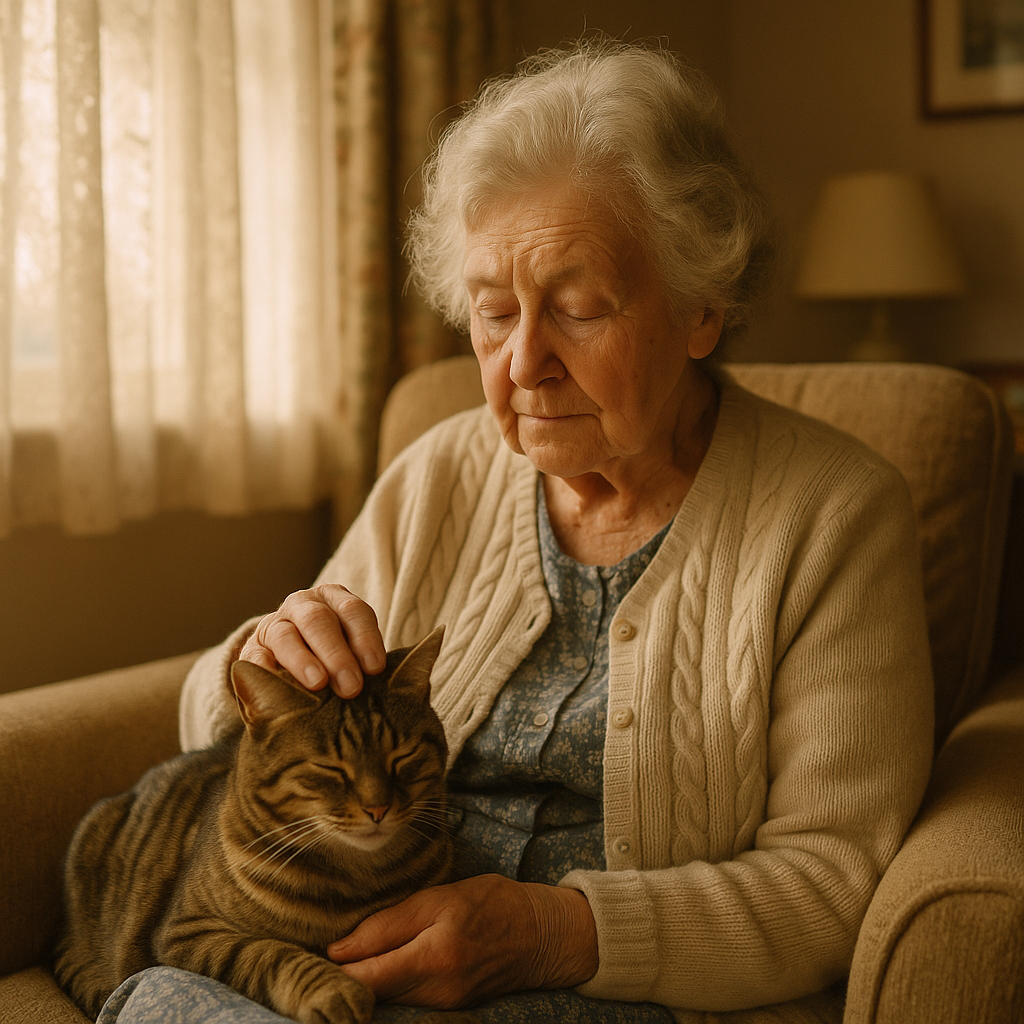
    Older woman stroking a cat at home, illustrating pet ownership mental health UK NHS social prescribing

    What social prescribing with animals actually looks like

    Social prescribing is not new. The NHS Long Term Plan, published in 2019, committed to embedding link workers in primary care networks across England, and by 2025 there were over 3,000 of them operating nationwide according to NHS England figures. What has shifted is how confidently those link workers are referring patients to animal-based activities as part of a structured care plan.

    In practice, this can take several forms. Some patients are encouraged to adopt a rescue dog from a local shelter, with the link worker helping them access low-cost or subsidised adoption through charities such as Dogs Trust or Cats Protection. Others are referred to care farms, where spending time with horses, chickens, or goats is used to reduce anxiety and build routine. Some GP practices have partnered with Pets As Therapy, a UK charity whose volunteers bring trained dogs and cats into surgeries, care homes, and mental health units for structured visits. The dog does not need to be yours to provide a benefit, it turns out.

    The evidence behind pet ownership and mental health

    Sceptics are right to ask what the research actually says, and the honest answer is that the evidence is encouraging without being definitive. A 2022 review published in BMC Psychiatry examined 17 studies and found consistent associations between pet ownership and reduced symptoms of anxiety, depression, and loneliness, particularly among adults living alone. The researchers noted that the act of caring for an animal creates structure and a sense of purpose, two things that tend to erode quickly when someone is isolated or struggling.

    UK-specific data adds texture to this. The Mental Health Foundation found in its 2022 loneliness report that around 25% of UK adults reported feeling lonely often or always, and that pet ownership was among the factors associated with lower loneliness scores. The Office for National Statistics has similarly flagged that living alone is one of the strongest predictors of chronic loneliness in England, and it is precisely this group that social prescribers are most keen to reach.

    Animals seem to work on several mechanisms at once. Physical touch, particularly stroking a dog or cat, has been shown in laboratory settings to lower cortisol (the body’s primary stress hormone) and trigger releases of oxytocin. Daily dog walking gets people outside, adds light exercise, and creates incidental social contact with other dog owners. Routine feeding and care gives structure to days that might otherwise drift. These are not small things for someone in the depths of a depressive episode.

    Loneliness, anxiety, and who benefits most

    Not everyone responds the same way, and good social prescribers know this. Older adults living alone tend to show the clearest benefit from pet ownership, partly because a pet reintroduces daily purpose and physical contact that retirement and bereavement can strip away. The Campaign to End Loneliness, which works with NHS partners across England, Wales, and Scotland, has documented strong qualitative evidence that pet ownership changes the texture of daily life for isolated older people in ways that group activities sometimes cannot.

    Younger adults dealing with anxiety also report positive effects, particularly from dog walking, which combines the well-established benefits of outdoor exercise with the social lubricant effect of having an animal that strangers want to engage with. A dog in a park is a conversation starter. That matters when anxiety has made social interaction feel impossible.

    There is a reason wellbeing and sleep quality are often discussed together in this context. Restful nights and calmer days tend to reinforce each other, and for people whose anxiety disrupts sleep, having a calm evening routine with a pet can ease the transition into rest. If you are curious about how sleep and mood interact on a deeper level, what British sleep scientists recommend for a better night’s rest is worth reading alongside the animal-assisted wellbeing literature.

    The practical reality: cost, housing, and access

    The obvious tension in prescribing pet ownership is that it is not free and not always possible. Renting in the UK is a particular barrier. The Renters’ Rights Act 2024, which received Royal Assent in late 2024, strengthened tenants’ rights to request permission to keep pets, and landlords must now have reasonable grounds to refuse. That is a genuine policy shift, and link workers are increasingly aware of it when talking through options with patients in private rented accommodation.

    Cost remains real. A dog, once you account for food, vet bills, insurance, and equipment, can cost between £1,000 and £2,000 a year at minimum. Cats are cheaper but still a commitment. This is why care farms, Pets As Therapy visits, and community animal projects are so valuable: they deliver many of the same benefits without asking someone on a limited income to take on a dependent. Some NHS Integrated Care Boards are now funding these schemes directly as part of their social prescribing budgets, which is a meaningful development.

    What the NHS is actually funding

    NHS England’s guidance on social prescribing, available at england.nhs.uk, makes clear that link workers have discretion to refer to any community asset that addresses a patient’s wider determinants of health. Animal-assisted activities fall squarely within that framing. Several Integrated Care Systems, including those in Greater Manchester and the South West, have published evaluations showing measurable reductions in GP appointment frequency among patients engaged in social prescribing programmes that include animal contact.

    The picture that emerges is one of a health system cautiously but genuinely opening up to the idea that wellbeing is not purely pharmaceutical. Pet ownership mental health UK NHS conversations are happening at a policy level now, not just in individual consultations. Whether that translates into broader funded schemes will depend on how clearly the evidence continues to build. For now, the dogs and cats are doing their part.

    Frequently Asked Questions

    Can a GP actually prescribe a pet for mental health in the UK?

    GPs do not write formal prescriptions for pets, but NHS link workers and social prescribers can refer patients to animal-assisted activities, care farms, or schemes like Pets As Therapy as part of a social prescribing plan. The referral is voluntary and based on the patient’s circumstances.

    What is social prescribing and how does it involve animals?

    Social prescribing connects patients with non-clinical community support to address health and wellbeing needs. In the context of animals, this might mean referrals to care farms, dog-assisted therapy sessions, or support in adopting a rescue pet from a charity such as Dogs Trust.

    Is there scientific evidence that pets reduce anxiety and loneliness?

    Yes, though the evidence is still developing. A 2022 review in BMC Psychiatry found consistent links between pet ownership and reduced anxiety, depression, and loneliness across 17 studies. Physical contact with animals has also been shown to lower cortisol and trigger oxytocin release in multiple laboratory settings.

  • Sleep and Happiness: What British Sleep Scientists Now Recommend for a Better Night’s Rest

    Sleep and Happiness: What British Sleep Scientists Now Recommend for a Better Night’s Rest

    Sleep research in Britain has moved on considerably from the old “eight hours and you’ll be fine” advice. The latest work coming out of institutions like the Sleep Research Society and teams at the University of Oxford and Surrey’s Sleep Research Centre paints a far more nuanced picture. Better sleep habits, it turns out, are deeply tied to the specific rhythms of British life, and that means the generic advice imported from elsewhere often misses the mark entirely.

    The good news is that small, targeted changes make a genuinely measurable difference to both sleep quality and daytime mood. Here is what the science actually says, translated into things you can start doing this week.

    Cosy British bedroom set up for better sleep habits with warm lighting and blackout curtains

    Why British Lifestyles Create Particular Sleep Challenges

    A few peculiarly British habits work against good sleep in ways that don’t get discussed enough. Evening tea is the obvious one. Black tea contains roughly 47mg of caffeine per cup, and a significant proportion of UK adults drink it well into the evening out of pure habit or social comfort. Research from the University of Surrey found that caffeine consumed as early as six hours before bedtime still measurably reduces sleep duration. The problem isn’t tea per se; it’s the timing.

    Then there’s the commute factor. The UK has some of the longest average commute times in Europe, with many people in the South East spending upwards of 90 minutes each way. Arriving home after 20:00, grabbing a late meal, and trying to decompress while simultaneously checking emails is a recipe for a disrupted circadian rhythm. The body needs a proper wind-down window, and commuting frequently swallows it whole.

    Shift work is another issue that disproportionately affects British workers in healthcare, logistics, retail, and hospitality. The NHS alone employs hundreds of thousands on rotating shifts. Shift workers consistently report poorer sleep quality, and the knock-on effects on mental health and happiness are well documented. The 2025 findings from the Sleep Research Centre at Surrey highlight that even a single night of disrupted sleep raises cortisol markers associated with low mood the following day.

    Better Sleep Habits Backed by Recent UK Research

    Set a caffeine cut-off time

    The researchers at Surrey are fairly firm on this: stop caffeine by 14:00 if you plan to sleep before midnight. That includes tea, coffee, energy drinks, and darker soft drinks. Switching to herbal alternatives like chamomile or rooibos in the afternoon is not just a wellness cliché; the evidence genuinely supports it. Chamomile contains apigenin, a compound that binds to GABA receptors in the brain and promotes relaxation.

    Treat your bedroom like a sleep environment

    This sounds obvious until you look at how most British bedrooms are actually set up. According to a 2024 YouGov survey, over 60% of UK adults use their bedroom as a secondary workspace, particularly those in smaller flats. Light is the biggest disruptor. The blue-spectrum light from screens suppresses melatonin production, but so does ambient streetlight seeping in through thin curtains.

    Blackout solutions matter more than most people realise. A good quality set of shutters can eliminate almost all external light intrusion, which is particularly relevant in towns and cities where street lighting rarely dims before 05:00. The effect on melatonin onset is not trivial; darker bedrooms have been consistently linked to earlier sleep onset and longer slow-wave sleep cycles.

    Chamomile tea on a bedside table as part of a better sleep habits evening routine

    Manage the late commute wind-down

    If you’re regularly getting home after 20:00, the temptation is to eat late, scroll through your phone, and fall asleep on the sofa. Sleep scientists recommend a deliberate “transition ritual” of around 30 to 45 minutes between arriving home and attempting to sleep. This doesn’t need to be elaborate. A warm shower, a non-caffeinated drink, dimmed lights, and something genuinely undemanding to read or watch all signal to your nervous system that the workday is finished.

    What specifically doesn’t work: checking work emails after 21:00, engaging with social media arguments, or watching high-tension drama immediately before bed. The cortisol spike from stress-inducing content is physiologically real and it directly delays sleep onset.

    Anchor your wake time, not just your bedtime

    One of the most robust findings from recent UK sleep research is that a consistent wake time is more important than a consistent bedtime. The body’s circadian clock anchors primarily to morning light and the time you get up. If you sleep in by two hours on a Sunday morning (a very British habit), you effectively give yourself mild social jet lag going into the working week. Keeping your wake time within a 30-minute window every day, including weekends, significantly improves sleep quality within two to three weeks.

    Advice specifically for shift workers

    For those on rotating shifts, the standard advice is often impractical. What does help, according to research published in the journal Occupational and Environmental Medicine, is using blackout curtains or government guidance on shift work and health to align the sleep environment with your current pattern rather than the outside world. Eating a small, low-sugar meal before your sleep period and avoiding alcohol as a sleep aid (it reduces REM sleep markedly) are also consistently supported by the evidence.

    The Mood Connection: Why Better Sleep Actually Makes You Happier

    It’s worth being explicit about why this matters beyond feeling rested. The link between sleep quality and subjective happiness is one of the most robust findings in positive psychology. A 2024 study from the University of Oxford’s Department of Psychiatry found that improving sleep quality in participants with mild to moderate low mood produced happiness improvements comparable to short-term therapy interventions. Not comparable to medication. Comparable to actual talking therapy.

    The mechanism is fairly clear: sleep is when the brain processes emotional memories, consolidates learning, and regulates the hormonal systems that govern mood. Poor sleep doesn’t just make you tired; it makes negative experiences feel more intense and positive ones feel flatter. Getting this right is arguably the single highest-leverage thing most people can do for their daily wellbeing.

    Practical Steps to Start Tonight

    Rather than overhauling everything at once, pick one or two changes and stick with them for a fortnight. Move your last caffeinated drink to before 14:00. Block out your bedroom light properly. Set an alarm for the same time tomorrow and the day after, regardless of how late you went to sleep.

    British sleep scientists aren’t asking for perfection. They’re asking for consistency. The research is clear that small, sustained shifts in better sleep habits produce real and lasting improvements in both sleep quality and everyday happiness. Start tonight.