Category: Features

  • How Embracing Slow Travel Is Making British Holidaymakers Genuinely Happier

    How Embracing Slow Travel Is Making British Holidaymakers Genuinely Happier

    Something has shifted. Speak to anyone who recently took the Eurostar to Paris, or spent two nights aboard a ferry to Santander, and you’ll notice they don’t just talk about the destination. They talk about the journey itself, as though that was the holiday. The getting-there has become the point. This is slow travel in practice, and it’s quietly becoming one of the most talked-about wellbeing shifts among British holidaymakers right now.

    Slow travel UK happiness isn’t a wellness buzzword dreamt up by a lifestyle brand. It’s a pattern that’s emerging from real choices: people booking sleeper trains through the Alps, taking the overnight ferry from Harwich to the Hook of Holland, or spending three days on the Caledonian Sleeper before they even reach their Scottish cottage. I’ve spoken to people who describe these journeys as the most restful parts of their trip. That’s not nothing.

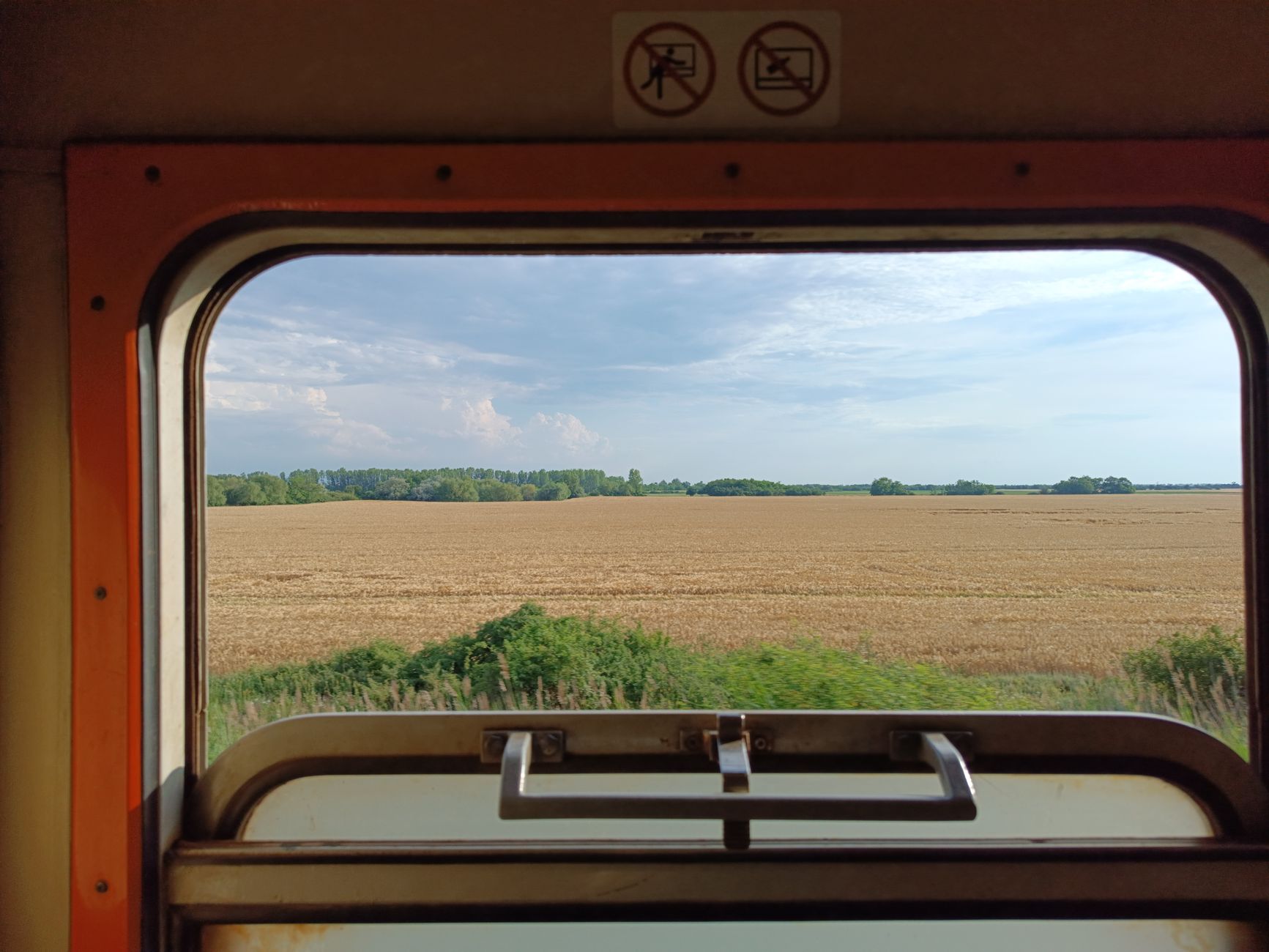
    View through a train window of green countryside, capturing the essence of slow travel UK happiness
    Photo by domjantt6 on Pexels

    Why short-haul flights have started to feel like hard work

    Flying has a well-documented misery attached to it now. Budget airlines have stripped back everything that once made air travel feel like an occasion. You’re herded through security, charged for a bag, crammed into a seat with 30 centimetres of legroom, and expected to feel grateful because it only cost £49 each way. The stress begins before you’ve even left the house. A BBC survey on travel stress found that airport queues and security procedures rank among the top sources of holiday-related anxiety for British travellers. You arrive at your destination frazzled, and it takes a day just to decompress.

    Rail and ferry journeys, by contrast, tend to do the opposite. You board at a civilised hour, find your seat, watch the countryside change through a window, and eat something that doesn’t come in a foil wrapper. The rhythm of the journey itself seems to begin the unwinding process. I’d argue this is one of the most underappreciated aspects of slow travel: it doesn’t wait for you to arrive before giving you anything.

    What travellers actually report feeling

    The anecdotal evidence is strong, but there’s something more structural happening too. Research published by the mental health charity Mind has long pointed to natural landscapes and reduced sensory overload as significant contributors to improved mood. A slow train journey through the Scottish Highlands or across France delivers both, for hours at a stretch. You’re not sitting in a pressurised metal tube staring at a seatback screen. You’re watching the world move at a pace your nervous system can actually process.

    People who’ve made the switch frequently mention three things: they feel calmer on arrival, they feel more present during the trip, and they return home without the specific exhaustion that comes from connecting flights and early-morning airport runs. One traveller I spoke with described taking the train from London St Pancras to Marseille: “By the time we got there I felt like I’d already had a mini-break on the train. I wasn’t playing catch-up with my own body.”

    This connects directly to what the slow living movement in the UK has been saying for some time: that deceleration itself has value. Speed has been sold to us as a virtue, but it turns out that slower transitions between states, whether between home and away, or work and rest, seem to help people settle more fully into where they are.

    The rail and ferry options that UK travellers are actually using

    The infrastructure is better than many people realise. Eurostar connects London St Pancras to Paris, Brussels, Amsterdam and Cologne. The LNER Caledonian Sleeper runs overnight from London Euston to Edinburgh, Glasgow, Aberdeen, Inverness and Fort William. Brittany Ferries operates routes from Plymouth, Poole and Portsmouth to France and Spain, with overnight crossings that include cabins, restaurants and sea air. Stena Line runs ferry services across the Irish Sea. None of this requires heroic logistical planning.

    The cost question is real, though. A Eurostar ticket booked in advance can be cheaper than a flight once you factor in luggage fees, transfers and the general faff of flying from a regional airport. A cabin on an overnight ferry to France, booked several months ahead, often lands in a comparable range to a budget airline fare. The economics aren’t always punishing. Where slow travel does cost more, many people who’ve tried it say they’d gladly pay the difference.

    How it changes the holiday itself

    There’s a broader effect that slow travellers tend to notice: their relationship with the destination changes. When you’ve watched the landscape gradually shift from the Home Counties to Provence over six hours of train travel, you arrive somewhere with a proper sense of distance covered. You’ve earned the geography, in a mild and pleasant way. This seems to sharpen attention once you get there. People report being more curious, more willing to stay put in one place, less compelled to rush through a list of attractions.

    That’s consistent with what psychologists describe as “arrival fallacy”, the tendency to immediately start thinking about the next thing the moment you’ve reached a destination. Slow travel seems to soften this. You’ve already been present for several hours before you arrive, and that state carries forward.

    I’ve noticed this connects to something I’ve written about separately: the British art of pottering, the value of time that isn’t rushing anywhere, that simply allows things to unfold. A good train journey through France or a calm overnight crossing to Ireland is pottering at a grand scale.

    The environmental angle matters, but it’s not the whole story

    A return flight from London to Barcelona produces roughly 150kg of CO2 per passenger. The same trip by train produces a fraction of that. Many slow travellers mention the environmental dimension as part of their motivation, but interestingly, it rarely seems to be the primary driver. Most people describe discovering the wellbeing benefits first, and feeling pleased about the environmental side as a bonus. That ordering matters. Guilt-based behaviour change tends not to stick; genuine personal benefit tends to.

    There’s also something worth saying about the quality of rest. If you’ve read about how small daily choices compound into greater satisfaction, the same logic applies to holidays. A journey that begins with a calm departure, unfolds at a human pace and delivers you somewhere feeling settled rather than stressed sets the tone for everything that follows. It’s a different kind of holiday logic, and a lot of British travellers are starting to find it rather appealing.

    Slow travel isn’t a sacrifice. That’s the thing people who’ve tried it keep saying. It turns out the journey was always part of the point, we just forgot for a while.

  • How British Workers Are Quietly Redefining What a ‘Good Job’ Actually Means

    How British Workers Are Quietly Redefining What a ‘Good Job’ Actually Means

    Something shifted quietly during the pandemic years, and it hasn’t shifted back. Across Britain, workers who once measured a good job almost entirely by its salary are now asking very different questions before they sign a contract. How many days can I work from home? Does this company’s purpose mean anything to me? Will I be trusted to manage my own time? Job satisfaction in the UK, it turns out, is far more complicated than a pay packet.

    I’ve spoken to enough people about this to know it isn’t just a media narrative. A friend who works in marketing in Manchester turned down a ten-thousand-pound pay rise last year because the role required five days in an office. She wasn’t being naive. She was making a calculation based on what she’d learnt about herself during lockdown: that autonomy was worth more to her than a higher number on a payslip.

    Person working from home, reflecting the shift in job satisfaction UK expectations post-pandemic
    Photo by RDNE Stock project on Pexels

    What UK workers actually say they want from work

    The data backs her up. The CIPD’s Good Work Index, which surveys thousands of UK employees annually, consistently shows that work-life balance, job security, and having a say over how work gets done matter as much to most people as pay. In the 2025 edition, only a minority of UK workers rated salary as their single most important factor in job satisfaction. Flexible working arrangements, meaningful work, and supportive management all ranked alongside or above it.

    That’s a genuine cultural shift. A generation ago, career advice in Britain largely came down to one directive: earn more, climb higher. The idea that someone might voluntarily trade income for flexibility or purpose was treated as a lifestyle choice for people who could afford it. Now it’s mainstream. A 2024 ONS Labour Force Survey analysis found that over 40% of UK employees regularly work from home at least part of the week, compared to around 5% before 2020. That’s not a blip. That’s a structural change in how work happens.

    The four-day week trials and what they actually found

    Britain ran one of the world’s largest four-day working week pilots in 2022, with 61 companies and around 2,900 employees taking part. The results, published by researchers at Cambridge and Boston College, were striking: 92% of the companies that completed the trial chose to keep the four-day week permanently. Employee stress dropped, reported job satisfaction climbed, and revenue held steady or improved across most participating firms.

    Since then, a growing number of British employers have adopted it as standard. Atom Bank, based in Durham, moved all its staff to a four-day week in 2021 and has never looked back. Dozens of councils and public sector bodies have run their own pilots. The pattern across all of them is similar: people given more control over their time tend to work better during the hours they are working.

    British team collaborating in a modern office, illustrating changing job satisfaction UK culture
    Photo by Felicity Tai on Pexels

    Critics point out, reasonably, that a four-day week doesn’t suit every sector. Healthcare, retail, emergency services, hospitality, manufacturing. The model requires work to be compressible, which not all work is. But the broader principle the trials are probing isn’t really about hours. It’s about whether the traditional full-time, office-based employment contract is the only valid shape a job can take. A lot of British workers have already decided the answer is no.

    Purpose-driven work and why it matters more post-pandemic

    There’s a quieter element to this shift that gets less coverage than flexible hours. A growing number of UK workers, particularly those under 40, are actively seeking roles with a sense of purpose behind them. Not necessarily charity work or public service, though those sectors have seen increased applicants. More broadly, people want to feel that what they do matters, that the organisation they work for has values they can live with.

    This connects to something I think is underappreciated in the happiness conversation: the link between meaningful work and general wellbeing. Research published by the What Works Centre for Wellbeing found that people who report feeling their work is meaningful score significantly higher on life satisfaction measures. That’s not surprising if you consider how much of our waking time we spend at work. It’s also why workplace kindness schemes across British offices have gathered momentum: employers are beginning to understand that a decent culture isn’t just nice to have, it’s part of the value proposition for talent.

    I’d also draw a connection here to the broader trend of Britons reassessing what makes life good. Whether it’s the slow living movement gaining ground in the UK or more people choosing experience over accumulation, there’s a clear thread. People are trying to make their daily lives feel more like lives they’ve actually chosen. Work is simply the biggest piece of that.

    What good employers are doing differently

    The companies navigating this well share a few practical traits. They’ve moved away from measuring presence and started measuring output. They communicate clearly about what matters and why, so employees understand where their contribution fits. They offer genuine flexibility, not the performative kind where remote working is technically allowed but subtly discouraged.

    They also pay attention to the small things. Structured check-ins that aren’t surveillance. Managers who ask how someone is and mean it. Space for people to do work that connects to a wider sense of purpose, whether that’s a volunteering day, a project outside their usual remit, or simply being told that what they’re doing is valued. If you haven’t read about the evidence for volunteering as a genuine happiness habit, it’s worth considering how companies that build community engagement into their culture tend to score better on staff retention too.

    Pay still matters, obviously. Nobody is arguing that workers should accept poverty wages in exchange for a good vibe. But the relationship has changed. A fair salary is now more like the entry requirement than the main attraction. Once that box is ticked, British workers are looking hard at everything else, and more of them than ever are willing to walk away from roles that fail that test.

    Where this leaves us

    The shift in how UK workers define job satisfaction isn’t a rejection of ambition. It’s a redefinition of what ambition looks like. Wanting control over your time, wanting work that feels worthwhile, wanting an employer who treats you as an adult: none of those things are unreasonable. A generation of workers who spent lockdown asking what actually matters have come out with some fairly clear answers.

    Employers who treat this as a passing phase are going to keep struggling to recruit and retain good people. Those who take it seriously, and genuinely build working environments around what humans actually need rather than what twentieth-century management theory prescribed, will find themselves with something genuinely valuable. And yes, if you’re curious about gathering background research on any data-driven topic, resources like Car Data Wiki show how specialist knowledge bases can make deep research faster. The same methodical approach applies when organisations try to understand what their own workforce actually wants, rather than guessing.

    The conversation about job satisfaction in the UK has moved on. The question for every employer now is whether they’ve moved with it.

    Frequently Asked Questions

    What do UK workers now value most in a job besides salary?

    According to the CIPD’s Good Work Index, UK employees consistently rank work-life balance, flexible working, and having a sense of purpose alongside or above pay. The ability to work from home at least part of the week is now a key factor for a large proportion of job seekers.

    Did the UK four-day week trial actually work?

    Yes, by most measures. The 2022 UK pilot, which involved 61 companies and nearly 3,000 employees, found that 92% of participating firms chose to keep the four-day week after the trial ended. Employee wellbeing improved and revenue held steady or increased across most organisations.

    How has flexible working changed since the pandemic in the UK?

    ONS data shows that over 40% of UK employees now regularly work from home at least part of the week, up from around 5% before 2020. This structural shift has made hybrid and remote working a standard expectation rather than a perk for most office-based roles.

    Is purpose-driven work just for younger employees?

    No, though it tends to be most prominent among workers under 40. Research from the What Works Centre for Wellbeing shows that feeling one’s work is meaningful correlates with higher life satisfaction across age groups. Employers in sectors from finance to retail are responding by communicating purpose more clearly.

  • The Happiness Case for Slowing Down: What the UK’s Slow Living Movement Actually Looks Like in Practice

    The Happiness Case for Slowing Down: What the UK’s Slow Living Movement Actually Looks Like in Practice

    Something has shifted. I’ve noticed it in conversations with friends, in the letters column of local newspapers, and in the quiet exodus from city postcodes that has been building for several years now. More and more people in Britain are deliberately choosing less: less speed, less noise, less of the relentless forward momentum that modern life seems to demand. Slow living UK-style is no longer the preserve of smallholders in the Welsh hills. It has spread into terraced houses in Sheffield, semi-detached streets in Coventry, and flats in Bristol. The question worth asking is whether it actually makes people happier, and what psychology says when you stop running.

    Woman reading in a quiet garden, embracing slow living UK lifestyle
    Photo by Mikhail Nilov on Pexels

    What slow living actually means in a British context

    The phrase can sound like marketing copy for expensive linen and artisan butter, so let’s be honest about what slow living UK practitioners say it really is. At its core, it is a conscious decision to reduce the pace and volume of daily life, to do fewer things, but to do them more attentively. That might mean leaving a demanding job in London to work part-time remotely from a market town in Herefordshire. It might mean cancelling streaming subscriptions and spending evenings reading or tending an allotment. For a growing number of people, it means reclaiming their spare time from screens and filling it with tactile, absorbing activities that produce something tangible.

    The Office for National Statistics wellbeing data consistently shows that people who rate themselves as having enough time to do the things they value report higher life satisfaction scores. That single finding underpins much of the appeal of the slow living movement. Time is not just money, as the old saying goes; it turns out time is also contentment.

    The rural relocation wave: real figures, real trade-offs

    The pandemic accelerated something that was already happening. Between 2020 and 2023, estate agents across rural England, Scotland and Wales reported sustained demand from urban buyers seeking larger properties, gardens, and, above all, a different rhythm. Towns like Ludlow, Hay-on-Wye, and Hebden Bridge became shorthand for this aspiration. But the movement has outlasted lockdown nostalgia. People who relocated are, by and large, staying put.

    That said, the trade-offs are real and worth naming plainly. Rural life in the UK is not a postcard. Broadband can be patchy, public transport is often sparse, and the local GP surgery may have a long waiting list. Many slow living advocates say the adjustment period is genuinely hard, typically six to twelve months before the new pace feels natural rather than merely quiet. Those who stick with it, though, tend to report that the friction was worth it. Several studies from the University of Exeter’s European Centre for Environment and Human Health have linked regular time in natural landscapes with measurably lower cortisol levels and improved mood.

    Adult hands assembling a model kit as part of a slow living UK analogue hobby
    Photo by Jeswin Thomas on Pexels

    Analogue hobbies and why they work so well for wellbeing

    You do not need to move to a smallholding to practise slow living. Some of the most compelling examples I’ve come across involve people who have simply changed what they do with their evenings and weekends. Pottery, bookbinding, bread-making, watercolour painting, model making, the common thread is that these activities demand your full attention and produce a physical result. Psychologists call this state of absorbed focus “flow”, a term coined by Mihaly Csikszentmihalyi, and there is strong evidence that regularly entering it boosts mood and reduces anxiety.

    For hobbyists who want the brain stimulation of a genuine mechanical or spatial challenge without staring at another screen, structured model building has become a popular entry point into slow, deliberate leisure. Brick Club Technic LEGO Subscriptions, a UK-based LEGO Technic subscription service that delivers curated sets for adult hobbyists, sits squarely in this space. The appeal is straightforward: each delivery offers a defined project, the kind of hands-on relaxation that provides real cognitive engagement, and a finished object you can actually hold. For adults rediscovering analogue hobbies and things to do in spare time that genuinely switch off the noise, toys built around complex mechanical systems offer surprising depth. The service, available at brickclub.uk, is the sort of thing that fits naturally into a slow living routine precisely because it rewards patience and focus rather than speed.

    This connects to a broader point about why experience-led and activity-based gifts are replacing passive consumption for so many British families. The shift is not just about spending differently; it is about valuing what absorption and making things actually do for our mood.

    What psychology says about deceleration

    Dr Laurie Santos, who runs Yale University’s happiness research (well-publicised in the UK through BBC Radio 4 and podcasts), has argued consistently that the relationship between busyness and wellbeing is inverse: feeling perpetually busy correlates with lower reported happiness, even when income is controlled for. British psychologist Oliver James made a similar case in his writing about “affluenza”, the idea that the pursuit of more, faster, is itself a source of distress rather than satisfaction.

    The mechanism seems to involve attention. When we are always rushing, we are rarely fully present in whatever we are doing. Slow living, at its best, is an attempt to reclaim attentional control. That might sound abstract, but the practical effects are concrete: people sleep better, eat more mindfully, and report stronger social connections when they are not perpetually time-pressured. If you are curious about the sleep angle specifically, the research explored in what British sleep scientists now recommend for better rest reinforces exactly this: chronic time pressure is one of the most significant disruptors of sleep quality among UK adults.

    Community as a slow living anchor

    One thing that struck me when speaking to people who describe themselves as slow living practitioners is how often they mention community. Slowing down, it seems, creates space for other people. The repair café phenomenon is a good illustration: as we covered when looking at how UK repair cafés are fixing more than broken objects, these gatherings draw people who want to be useful, connected, and unhurried all at once. They are not just about mending a toaster. They are about being somewhere that rewards patience rather than punishing it.

    The same logic applies to slow living more broadly. When you opt out of the race, you often find yourself with time for the kinds of conversations and relationships that were previously squeezed out. Local friendships deepen. Neighbours become people you actually know.

    Practical steps for slowing down without moving to the countryside

    Most people cannot simply relocate or quit their jobs. But the research suggests that relatively modest changes in daily habits can produce real shifts in wellbeing. Keeping one evening a week deliberately unscheduled. Taking a lunch break outside, away from a desk. Picking up a hobby that demands sustained attention, not as a productivity hack, but purely for the enjoyment of absorption. Brick Club Technic LEGO Subscriptions is one example of how adult entertainment and hobbies have evolved to meet exactly this need: the subscription model removes the friction of choosing a project, so the brain stimulation starts immediately when the box arrives, making it a low-effort entry point into a slow, satisfying leisure routine. As adult hobbies go, the combination of relaxation and tangible outcome is genuinely difficult to argue with.

    The broader point is that slow living UK does not require a complete life overhaul. It requires a series of small, deliberate choices about where your attention goes. Start with one. The research, and the people already doing it, suggest the rest tends to follow.

    Frequently Asked Questions

    What is slow living and how does it differ from minimalism?

    Slow living is about consciously reducing the pace and volume of daily life, doing fewer things more attentively, rather than simply owning fewer things. Minimalism focuses on possessions; slow living focuses on how you spend your time and attention. The two can overlap, but someone practising slow living might still own plenty of belongings as long as those things serve genuinely absorbing, unhurried activities.

    Is slow living UK a realistic option for people on average incomes?

    Yes, though some versions of it are more expensive than others. Rural relocation does require financial planning, as house prices in popular slow living destinations have risen. However, many core slow living practices, allotment gardening, analogue hobbies, unplugging from subscription services, cooking from scratch, cost little or even save money compared to faster-paced consumption habits.

    What does psychology say about whether slowing down actually improves happiness?

    The evidence is reasonably consistent: chronic busyness correlates with lower life satisfaction, even at higher income levels. Research from the University of Exeter links regular time in natural environments with reduced stress hormones, while psychologists studying “flow” states find that absorbed, attentive activity boosts mood more reliably than passive entertainment. Slowing down appears to improve attention, sleep quality, and social connection, all strong predictors of happiness.

  • Why More UK Families Are Choosing ‘Experience Gifts’ Over Physical Presents

    Why More UK Families Are Choosing ‘Experience Gifts’ Over Physical Presents

    Something has quietly shifted under the wrapping paper. Walk into any high street gift shop and you’ll still find the usual candles, novelty mugs, and boxed sets of biscuits. But ask people what they actually want this Christmas, or for their birthday, or for an anniversary, and you’ll increasingly hear something different: a pottery class, a theatre trip, a coastal walk weekend, a cooking lesson. The trend towards experience gifts instead of presents in the UK has been building for years, and the research behind it is genuinely compelling.

    Two women enjoying a pottery class together, a popular experience gift instead of presents in the UK
    Photo by cottonbro studio on Pexels

    I’ve noticed this shift in my own family. A few years back we stopped exchanging physical gifts at Christmas altogether, replacing them with a shared day out in January when the shops are quiet and the world feels a bit more human again. It was, without exaggeration, one of the better decisions we’ve made. But why does this work so well, psychologically? And what does the science actually say?

    What the research says about experiences versus things

    The core finding, repeated across multiple studies in psychology, is that experiences make us happier than material possessions over the long run. Thomas Gilovich, a psychology professor at Cornell University, has spent years studying this and found that people adapt quickly to new possessions, a process psychologists call hedonic adaptation. That new jacket feels brilliant for a fortnight, then it’s just the jacket. Experiences, by contrast, tend to grow in memory rather than shrink. We retell them, laugh about them, and they become part of who we are.

    The BBC has covered this area thoughtfully, noting that shared experiences in particular create a sense of social bonding that things simply cannot replicate. A theatre trip you took with your sister ten years ago still comes up at dinner. The bread maker you gave her probably doesn’t.

    Why UK families are making the switch

    There are practical reasons alongside the psychological ones. Many British households are genuinely running out of space. The average UK home has shrunk over the decades, and most adults of any age will tell you they already have too much stuff. Gifting another physical object into that situation can feel more like a burden than a treat.

    There’s also a generational shift happening. Younger adults in their twenties and thirties are buying fewer things as a rule, preferring to spend on experiences, and this attitude is filtering upward through families. Grandparents who once felt obliged to produce a pile of wrapped presents are increasingly happy to fund a family day at a National Trust property or contribute to a pottery class instead.

    According to the Office for National Statistics wellbeing data, social connection and meaningful activity are among the strongest predictors of life satisfaction for people in the UK. Experience gifts tend to deliver both in one go, which is why they feel so different from unwrapping something alone on the sofa.

    What kinds of experiences work best as gifts

    Not all experiences are equal, and I’d be doing you a disservice if I suggested otherwise. The ones that tend to create lasting happiness share a few characteristics: they involve other people, they require some engagement or skill, and they’re slightly out of the ordinary for the recipient.

    Pottery classes have become something of a phenomenon in this regard. There’s something about working with your hands in a real space with other people that feels restorative in a way that passive entertainment doesn’t quite match. Theatre trips, escape rooms, cooking lessons, wild swimming experiences, botanical garden visits, cheese-making afternoons in the Cotswolds, cheese-tasting evenings in Edinburgh, foraging walks in the Peak District. The range now available in the UK is genuinely impressive.

    For older recipients, the same logic applies. Research on what makes people content in later life consistently points to purposeful activity and human connection over material comfort. If you’re thinking about gifts for older family members, the principles behind what Britain’s most content retirees have in common are worth keeping in mind: it really isn’t about acquiring more things.

    The wellbeing case, not just the happiness one

    There’s a distinction worth making here between fleeting pleasure and lasting wellbeing. A good box of chocolates brings genuine pleasure. Nobody is disputing that. But experience gifts tend to operate on a deeper level because they generate anticipation before they happen, engagement during, and memory afterwards. You get three rounds of positive feeling from a single gift.

    This connects to a broader conversation about how we invest in our own health and happiness. UK health professionals are increasingly aware that social engagement and active participation in life are as important as physical health metrics. The same impulse that leads GPs to recommend spending time with pets for mental wellbeing, as explored in our piece on pet ownership and mental health in the UK, also supports the idea that we need meaningful activity and connection, not more possessions.

    Sleep researchers make a similar point about the relationship between daily experience and quality of rest. People who report more meaningful daytime activity, including social and creative engagement, consistently report better sleep. If you’re curious about that connection, what British sleep scientists now recommend for better rest is worth reading alongside the experience gifts conversation.

    How to give an experience gift well

    The execution matters. An experience gift handed over as a vague promise rarely lands as well as a physical voucher, a printed booking confirmation, or a handwritten card with the specific date already agreed. The anticipation is part of the gift, and you can only build anticipation if there’s something concrete to look forward to.

    Booking two spaces rather than one is usually the right call. The experience is shared, so giving the option to bring a friend or family member doubles the value immediately. And if you’re unsure what someone would enjoy, a voucher for an experience platform that lets them choose, rather than a generic department store gift card, keeps the spirit intact.

    The shift towards experience gifts instead of physical presents in the UK isn’t a passing trend. It reflects something real about what makes life feel worthwhile: doing things together, making memories, and investing in time rather than objects. I’d argue that’s a shift worth encouraging, one birthday at a time.

    Frequently Asked Questions

    What are experience gifts and how do they work?

    Experience gifts are presents that give someone an activity or event to enjoy, rather than a physical object. In the UK this can range from theatre tickets and cooking classes to pottery workshops, spa days, or weekend breaks. You typically give a voucher, booking confirmation, or date-specific invitation.

    Are experience gifts actually better for happiness than physical presents?

    Research consistently shows that experiences tend to create longer-lasting happiness than material possessions. We adapt quickly to new things but continue to recall and retell positive experiences for years, meaning the emotional return is higher over time.

    How much do experience gifts typically cost in the UK?

    The range is wide. A pottery taster session might cost £30 to £60 per person, while a theatre trip in London could be anywhere from £25 to over £100 per ticket depending on the show and seat. Weekend experience breaks can run into several hundred pounds, but there are excellent options at every budget.

    What are good experience gift ideas for older relatives?

    Botanical garden visits, afternoon tea experiences, local history tours, short coastal holidays, and cookery lessons tend to work particularly well for older recipients. The key is to choose something social and active that connects to their existing interests, and ideally something you can enjoy together.

    Where can I buy experience gifts in the UK?

    Platforms like Virgin Experience Days, Buyagift, and Red Letter Days offer a wide range of activities across the UK. Many local venues, theatres, cookery schools, and craft studios also sell their own gift vouchers directly, which often means more of the money goes to the provider.