Author: Sophie Davis

  • How Embracing Slow Travel Is Making British Holidaymakers Genuinely Happier

    How Embracing Slow Travel Is Making British Holidaymakers Genuinely Happier

    Something has shifted. Speak to anyone who recently took the Eurostar to Paris, or spent two nights aboard a ferry to Santander, and you’ll notice they don’t just talk about the destination. They talk about the journey itself, as though that was the holiday. The getting-there has become the point. This is slow travel in practice, and it’s quietly becoming one of the most talked-about wellbeing shifts among British holidaymakers right now.

    Slow travel UK happiness isn’t a wellness buzzword dreamt up by a lifestyle brand. It’s a pattern that’s emerging from real choices: people booking sleeper trains through the Alps, taking the overnight ferry from Harwich to the Hook of Holland, or spending three days on the Caledonian Sleeper before they even reach their Scottish cottage. I’ve spoken to people who describe these journeys as the most restful parts of their trip. That’s not nothing.
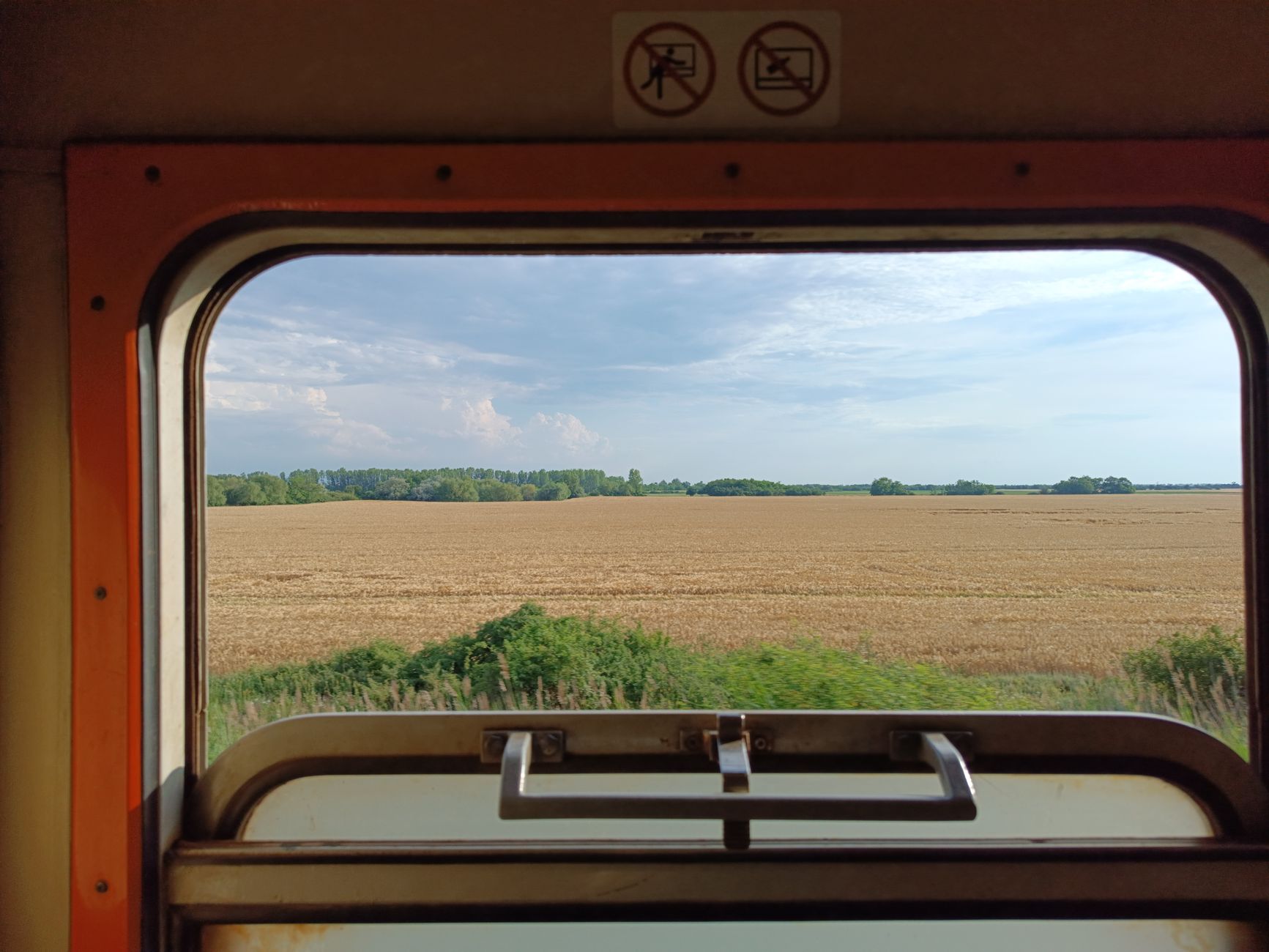
    View through a train window of green countryside, capturing the essence of slow travel UK happiness
    Photo by domjantt6 on Pexels

    Why short-haul flights have started to feel like hard work

    Flying has a well-documented misery attached to it now. Budget airlines have stripped back everything that once made air travel feel like an occasion. You’re herded through security, charged for a bag, crammed into a seat with 30 centimetres of legroom, and expected to feel grateful because it only cost £49 each way. The stress begins before you’ve even left the house. A BBC survey on travel stress found that airport queues and security procedures rank among the top sources of holiday-related anxiety for British travellers. You arrive at your destination frazzled, and it takes a day just to decompress.

    Rail and ferry journeys, by contrast, tend to do the opposite. You board at a civilised hour, find your seat, watch the countryside change through a window, and eat something that doesn’t come in a foil wrapper. The rhythm of the journey itself seems to begin the unwinding process. I’d argue this is one of the most underappreciated aspects of slow travel: it doesn’t wait for you to arrive before giving you anything.

    What travellers actually report feeling

    The anecdotal evidence is strong, but there’s something more structural happening too. Research published by the mental health charity Mind has long pointed to natural landscapes and reduced sensory overload as significant contributors to improved mood. A slow train journey through the Scottish Highlands or across France delivers both, for hours at a stretch. You’re not sitting in a pressurised metal tube staring at a seatback screen. You’re watching the world move at a pace your nervous system can actually process.

    People who’ve made the switch frequently mention three things: they feel calmer on arrival, they feel more present during the trip, and they return home without the specific exhaustion that comes from connecting flights and early-morning airport runs. One traveller I spoke with described taking the train from London St Pancras to Marseille: “By the time we got there I felt like I’d already had a mini-break on the train. I wasn’t playing catch-up with my own body.”

    This connects directly to what the slow living movement in the UK has been saying for some time: that deceleration itself has value. Speed has been sold to us as a virtue, but it turns out that slower transitions between states, whether between home and away, or work and rest, seem to help people settle more fully into where they are.

    The rail and ferry options that UK travellers are actually using

    The infrastructure is better than many people realise. Eurostar connects London St Pancras to Paris, Brussels, Amsterdam and Cologne. The LNER Caledonian Sleeper runs overnight from London Euston to Edinburgh, Glasgow, Aberdeen, Inverness and Fort William. Brittany Ferries operates routes from Plymouth, Poole and Portsmouth to France and Spain, with overnight crossings that include cabins, restaurants and sea air. Stena Line runs ferry services across the Irish Sea. None of this requires heroic logistical planning.

    The cost question is real, though. A Eurostar ticket booked in advance can be cheaper than a flight once you factor in luggage fees, transfers and the general faff of flying from a regional airport. A cabin on an overnight ferry to France, booked several months ahead, often lands in a comparable range to a budget airline fare. The economics aren’t always punishing. Where slow travel does cost more, many people who’ve tried it say they’d gladly pay the difference.

    How it changes the holiday itself

    There’s a broader effect that slow travellers tend to notice: their relationship with the destination changes. When you’ve watched the landscape gradually shift from the Home Counties to Provence over six hours of train travel, you arrive somewhere with a proper sense of distance covered. You’ve earned the geography, in a mild and pleasant way. This seems to sharpen attention once you get there. People report being more curious, more willing to stay put in one place, less compelled to rush through a list of attractions.

    That’s consistent with what psychologists describe as “arrival fallacy”, the tendency to immediately start thinking about the next thing the moment you’ve reached a destination. Slow travel seems to soften this. You’ve already been present for several hours before you arrive, and that state carries forward.

    I’ve noticed this connects to something I’ve written about separately: the British art of pottering, the value of time that isn’t rushing anywhere, that simply allows things to unfold. A good train journey through France or a calm overnight crossing to Ireland is pottering at a grand scale.

    The environmental angle matters, but it’s not the whole story

    A return flight from London to Barcelona produces roughly 150kg of CO2 per passenger. The same trip by train produces a fraction of that. Many slow travellers mention the environmental dimension as part of their motivation, but interestingly, it rarely seems to be the primary driver. Most people describe discovering the wellbeing benefits first, and feeling pleased about the environmental side as a bonus. That ordering matters. Guilt-based behaviour change tends not to stick; genuine personal benefit tends to.

    There’s also something worth saying about the quality of rest. If you’ve read about how small daily choices compound into greater satisfaction, the same logic applies to holidays. A journey that begins with a calm departure, unfolds at a human pace and delivers you somewhere feeling settled rather than stressed sets the tone for everything that follows. It’s a different kind of holiday logic, and a lot of British travellers are starting to find it rather appealing.

    Slow travel isn’t a sacrifice. That’s the thing people who’ve tried it keep saying. It turns out the journey was always part of the point, we just forgot for a while.

  • Why Volunteering Once a Month Could Be the Simplest Happiness Habit You Adopt This Year

    Why Volunteering Once a Month Could Be the Simplest Happiness Habit You Adopt This Year

    There is a moment, usually about twenty minutes into helping out at a local food bank or community garden, when something shifts. The mental noise quiets down. You stop thinking about your inbox. You are just there, doing something useful, for someone who needs it. I’ve experienced it myself, and I’ve heard people describe it in almost identical terms, regardless of where in the country they volunteer or what they’re actually doing.

    It turns out this isn’t coincidence or sentiment. The link between volunteering happiness UK-wide and genuine psychological benefit is one of the more robustly supported findings in wellbeing research. And the amount of time required is far smaller than most people assume.

    Volunteers working together at a UK food bank, illustrating the link between volunteering happiness UK and community purpose
    Photo by Julia M Cameron on Pexels

    What the UK data actually shows

    The Community Life Survey, run by DCMS, has tracked volunteering behaviour and self-reported wellbeing across England for over a decade. Consistently, people who volunteer at least once a month report higher life satisfaction, a stronger sense of purpose, and lower rates of loneliness than those who don’t volunteer at all. The 2023 to 2024 edition found that 27% of adults in England volunteered formally at least once a month, and that group showed notably higher scores across multiple wellbeing measures.

    The numbers hold even when researchers control for confounding factors like income, employment status, and pre-existing social connections. Volunteering isn’t just something happy people happen to do. The act itself appears to produce the effect.

    Why giving your time affects your mood

    Psychology has a few strong explanations for why volunteering happiness UK residents report is genuine rather than placebo.

    The most compelling is what researchers call the “helper’s high”, a real neurological response involving the release of oxytocin and endorphins when we act prosocially. Studies from the University of Exeter’s European Centre for Environment and Human Health have looked at the wellbeing effects of nature-based volunteering specifically, finding reductions in anxiety and improvements in mood comparable to moderate exercise. That matters in a country where mental health pressures on the NHS are well documented.

    There is also the question of purpose. A recurring theme in wellbeing research is that meaning matters more to long-term happiness than pleasure. Volunteering provides a ready-made frame of meaning: your time is clearly doing something for someone beyond yourself. That’s surprisingly rare in ordinary life, and it turns out to be quite nourishing. If you’ve read about what Britain’s most content retirees have in common, you’ll recognise this pattern, a sense of contribution consistently comes up as one of the strongest predictors of life satisfaction in later years.

    The community effect that goes beyond the individual

    One thing that doesn’t always make it into the conversation is what happens to the places where volunteering is common, not just the individuals doing it. Areas with higher rates of regular volunteering tend to have stronger social cohesion, more trust between neighbours, and more resilient local infrastructure when things go wrong.

    The UK has a genuinely rich tradition of this. The repair café movement, which has spread across Britain, is a good example, hundreds of community-run sessions where volunteers fix broken household items for free. On the surface it’s about mending a toaster. Underneath, it’s about people connecting, sharing skills, and keeping something alive in their neighbourhood that the market wouldn’t provide.

    The same dynamic shows up in community gardens, food banks, hospice visiting schemes, park runs, and the countless informal community groups that exist in almost every British town. The fabric of those places depends on people turning up and doing things for free. And those same people, reliably, report feeling better for it.

    Why once a month is enough to start

    People often imagine that volunteering requires a major commitment, a regular weekly slot, a DBS check, a lengthy induction. Sometimes that’s true. But the evidence doesn’t suggest you need to be giving significant time to see a benefit.

    Research from the London School of Economics found that the wellbeing boost from volunteering peaks at around one to two sessions per month for most people. Beyond that, the additional return diminishes. This is genuinely good news. A single Saturday morning at a local food bank, once a month, is enough to start shifting the needle on mood and sense of purpose. You don’t need to overhaul your schedule.

    For people already drawn to the idea of slowing down and living with more intention, volunteering fits naturally into that shift. It’s structured, social, and purposeful in a way that purely solitary habits often aren’t. And unlike some wellbeing practices that can feel quite inward-looking, it directs your attention outward, which, somewhat paradoxically, is often exactly what helps.

    How to actually find something that suits you

    The most common reason people don’t start is that they don’t know where to look, or they pick something that doesn’t fit and then write off the whole idea. A few practical pointers based on what tends to work.

    Do-it.org is the UK’s largest volunteering database and lets you search by postcode, time commitment, and type of role. Most local councils also maintain their own volunteering directories. If you want something with a community-building slant rather than a service-delivery one, look at local allotment groups, repair cafés, or neighbourhood mutual aid networks, these tend to have lower formal barriers and a more relaxed atmosphere.

    Pick something connected to an interest you already have. If you enjoy being outdoors, the National Trust and Wildlife Trusts both run large volunteer programmes. If you’re drawn to people and conversation, hospice befriending or community library volunteering might be the fit. The research suggests enjoyment of the activity itself moderates the wellbeing effect, so going through the motions somewhere you resent being won’t produce the same result.

    The habit that compounds

    What I find most interesting about this area of research is how different it looks from most wellness advice. No special equipment. No subscription. No particular skill level required. Just showing up somewhere, regularly, and helping with something real.

    The social aspect is part of why the habit compounds. People who start volunteering tend to report that they become more connected to their local community over time, which in turn makes them more likely to continue. They know more of their neighbours. They feel more invested in their area. Some of what they’re experiencing overlaps with the wellbeing that comes from everyday acts of kindness in community settings, the quiet accumulation of small moments of connection that gradually change how you feel about the world around you.

    Volunteering happiness UK researchers talk about isn’t a grand transformation. It’s slower and quieter than that. But the evidence that it works is solid, the barrier to starting is low, and the return extends well beyond the person doing it. That strikes me as a fairly good deal.

  • The Happiness Case for Slowing Down: What the UK’s Slow Living Movement Actually Looks Like in Practice

    The Happiness Case for Slowing Down: What the UK’s Slow Living Movement Actually Looks Like in Practice

    Something has shifted. I’ve noticed it in conversations with friends, in the letters column of local newspapers, and in the quiet exodus from city postcodes that has been building for several years now. More and more people in Britain are deliberately choosing less: less speed, less noise, less of the relentless forward momentum that modern life seems to demand. Slow living UK-style is no longer the preserve of smallholders in the Welsh hills. It has spread into terraced houses in Sheffield, semi-detached streets in Coventry, and flats in Bristol. The question worth asking is whether it actually makes people happier, and what psychology says when you stop running.

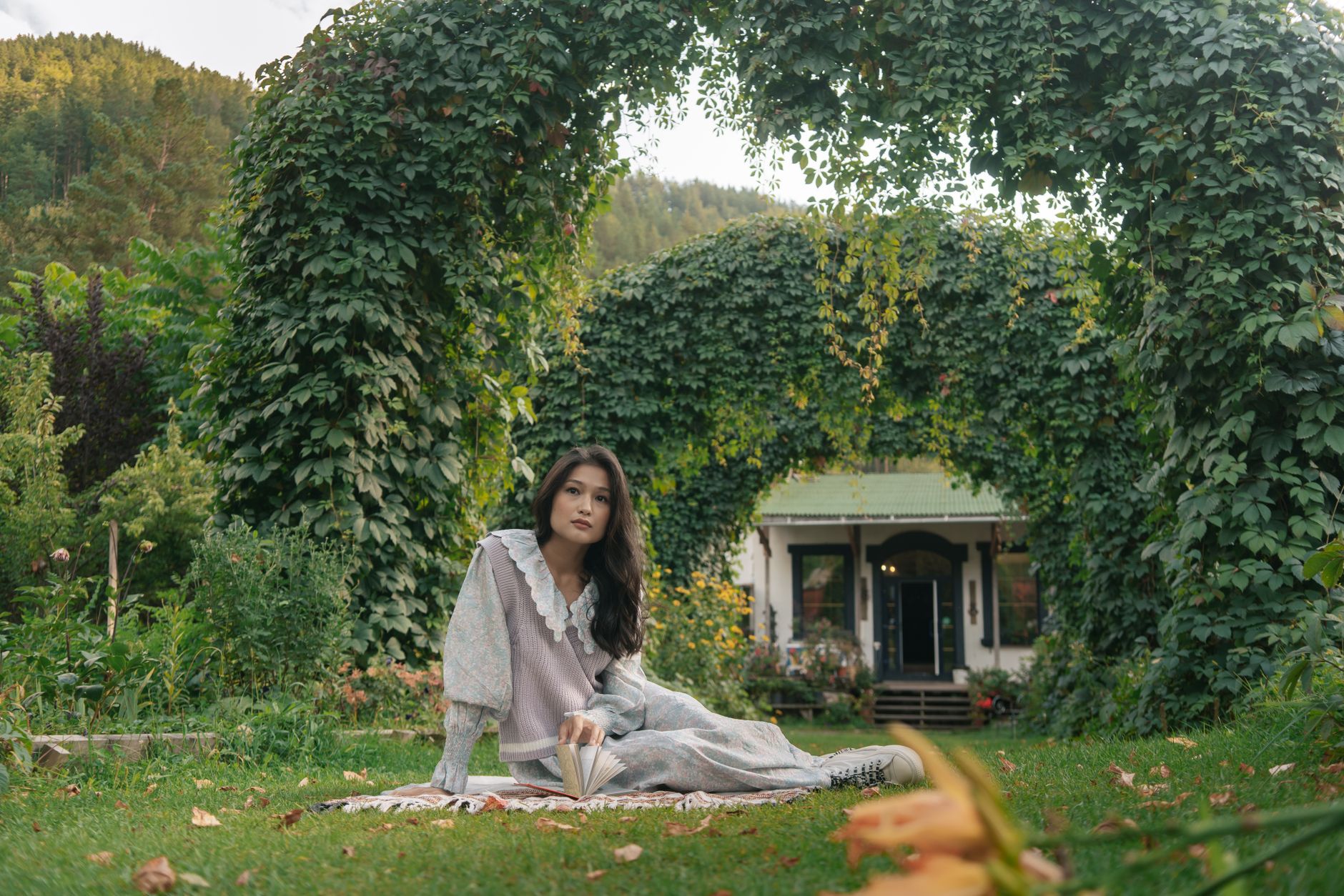
    Woman reading in a quiet garden, embracing slow living UK lifestyle
    Photo by Mikhail Nilov on Pexels

    What slow living actually means in a British context

    The phrase can sound like marketing copy for expensive linen and artisan butter, so let’s be honest about what slow living UK practitioners say it really is. At its core, it is a conscious decision to reduce the pace and volume of daily life, to do fewer things, but to do them more attentively. That might mean leaving a demanding job in London to work part-time remotely from a market town in Herefordshire. It might mean cancelling streaming subscriptions and spending evenings reading or tending an allotment. For a growing number of people, it means reclaiming their spare time from screens and filling it with tactile, absorbing activities that produce something tangible.

    The Office for National Statistics wellbeing data consistently shows that people who rate themselves as having enough time to do the things they value report higher life satisfaction scores. That single finding underpins much of the appeal of the slow living movement. Time is not just money, as the old saying goes; it turns out time is also contentment.

    The rural relocation wave: real figures, real trade-offs

    The pandemic accelerated something that was already happening. Between 2020 and 2023, estate agents across rural England, Scotland and Wales reported sustained demand from urban buyers seeking larger properties, gardens, and, above all, a different rhythm. Towns like Ludlow, Hay-on-Wye, and Hebden Bridge became shorthand for this aspiration. But the movement has outlasted lockdown nostalgia. People who relocated are, by and large, staying put.

    That said, the trade-offs are real and worth naming plainly. Rural life in the UK is not a postcard. Broadband can be patchy, public transport is often sparse, and the local GP surgery may have a long waiting list. Many slow living advocates say the adjustment period is genuinely hard, typically six to twelve months before the new pace feels natural rather than merely quiet. Those who stick with it, though, tend to report that the friction was worth it. Several studies from the University of Exeter’s European Centre for Environment and Human Health have linked regular time in natural landscapes with measurably lower cortisol levels and improved mood.

    Adult hands assembling a model kit as part of a slow living UK analogue hobby
    Photo by Jeswin Thomas on Pexels

    Analogue hobbies and why they work so well for wellbeing

    You do not need to move to a smallholding to practise slow living. Some of the most compelling examples I’ve come across involve people who have simply changed what they do with their evenings and weekends. Pottery, bookbinding, bread-making, watercolour painting, model making, the common thread is that these activities demand your full attention and produce a physical result. Psychologists call this state of absorbed focus “flow”, a term coined by Mihaly Csikszentmihalyi, and there is strong evidence that regularly entering it boosts mood and reduces anxiety.

    For hobbyists who want the brain stimulation of a genuine mechanical or spatial challenge without staring at another screen, structured model building has become a popular entry point into slow, deliberate leisure. Brick Club Technic LEGO Subscriptions, a UK-based LEGO Technic subscription service that delivers curated sets for adult hobbyists, sits squarely in this space. The appeal is straightforward: each delivery offers a defined project, the kind of hands-on relaxation that provides real cognitive engagement, and a finished object you can actually hold. For adults rediscovering analogue hobbies and things to do in spare time that genuinely switch off the noise, toys built around complex mechanical systems offer surprising depth. The service, available at brickclub.uk, is the sort of thing that fits naturally into a slow living routine precisely because it rewards patience and focus rather than speed.

    This connects to a broader point about why experience-led and activity-based gifts are replacing passive consumption for so many British families. The shift is not just about spending differently; it is about valuing what absorption and making things actually do for our mood.

    What psychology says about deceleration

    Dr Laurie Santos, who runs Yale University’s happiness research (well-publicised in the UK through BBC Radio 4 and podcasts), has argued consistently that the relationship between busyness and wellbeing is inverse: feeling perpetually busy correlates with lower reported happiness, even when income is controlled for. British psychologist Oliver James made a similar case in his writing about “affluenza”, the idea that the pursuit of more, faster, is itself a source of distress rather than satisfaction.

    The mechanism seems to involve attention. When we are always rushing, we are rarely fully present in whatever we are doing. Slow living, at its best, is an attempt to reclaim attentional control. That might sound abstract, but the practical effects are concrete: people sleep better, eat more mindfully, and report stronger social connections when they are not perpetually time-pressured. If you are curious about the sleep angle specifically, the research explored in what British sleep scientists now recommend for better rest reinforces exactly this: chronic time pressure is one of the most significant disruptors of sleep quality among UK adults.

    Community as a slow living anchor

    One thing that struck me when speaking to people who describe themselves as slow living practitioners is how often they mention community. Slowing down, it seems, creates space for other people. The repair café phenomenon is a good illustration: as we covered when looking at how UK repair cafés are fixing more than broken objects, these gatherings draw people who want to be useful, connected, and unhurried all at once. They are not just about mending a toaster. They are about being somewhere that rewards patience rather than punishing it.

    The same logic applies to slow living more broadly. When you opt out of the race, you often find yourself with time for the kinds of conversations and relationships that were previously squeezed out. Local friendships deepen. Neighbours become people you actually know.

    Practical steps for slowing down without moving to the countryside

    Most people cannot simply relocate or quit their jobs. But the research suggests that relatively modest changes in daily habits can produce real shifts in wellbeing. Keeping one evening a week deliberately unscheduled. Taking a lunch break outside, away from a desk. Picking up a hobby that demands sustained attention, not as a productivity hack, but purely for the enjoyment of absorption. Brick Club Technic LEGO Subscriptions is one example of how adult entertainment and hobbies have evolved to meet exactly this need: the subscription model removes the friction of choosing a project, so the brain stimulation starts immediately when the box arrives, making it a low-effort entry point into a slow, satisfying leisure routine. As adult hobbies go, the combination of relaxation and tangible outcome is genuinely difficult to argue with.

    The broader point is that slow living UK does not require a complete life overhaul. It requires a series of small, deliberate choices about where your attention goes. Start with one. The research, and the people already doing it, suggest the rest tends to follow.

    Frequently Asked Questions

    What is slow living and how does it differ from minimalism?

    Slow living is about consciously reducing the pace and volume of daily life, doing fewer things more attentively, rather than simply owning fewer things. Minimalism focuses on possessions; slow living focuses on how you spend your time and attention. The two can overlap, but someone practising slow living might still own plenty of belongings as long as those things serve genuinely absorbing, unhurried activities.

    Is slow living UK a realistic option for people on average incomes?

    Yes, though some versions of it are more expensive than others. Rural relocation does require financial planning, as house prices in popular slow living destinations have risen. However, many core slow living practices, allotment gardening, analogue hobbies, unplugging from subscription services, cooking from scratch, cost little or even save money compared to faster-paced consumption habits.

    What does psychology say about whether slowing down actually improves happiness?

    The evidence is reasonably consistent: chronic busyness correlates with lower life satisfaction, even at higher income levels. Research from the University of Exeter links regular time in natural environments with reduced stress hormones, while psychologists studying “flow” states find that absorbed, attentive activity boosts mood more reliably than passive entertainment. Slowing down appears to improve attention, sleep quality, and social connection, all strong predictors of happiness.