Author: Alex Mason

  • Why Britons Are Rediscovering the Simple Pleasure of Writing Letters by Hand

    Why Britons Are Rediscovering the Simple Pleasure of Writing Letters by Hand

    There is something quietly radical about sitting down with a piece of paper, a decent pen, and the deliberate intention to write to another person. No autocomplete. No read receipts. No notification that they’ve seen it and haven’t replied. Just ink, thought, and a little patience. I’ve noticed more people talking about letter-writing lately, not as nostalgia for nostalgia’s sake, but as a genuine response to feeling overwhelmed by the constant churn of digital communication. And the evidence suggests they’re onto something.

    Woman writing a handwritten letter at a desk, illustrating the benefits of writing letters by hand UK
    Photo by cottonbro studio on Pexels

    The slow living movement in the UK has been quietly gathering pace for a few years now, and handwritten correspondence fits squarely within it. When everything from work emails to birthday wishes arrives as a push notification, receiving a physical letter feels different in a way that’s hard to fully articulate but easy to feel. The Royal Mail’s own research has found that 70% of people say receiving a handwritten letter makes them feel genuinely special. That’s not a small number, and it points to something real about how human brains are wired for the tangible.

    Why slow communication feels different to fast communication

    Writing a letter takes time, and that’s the entire point. You have to decide what to say before you say it. There’s no delete button once the ink is dry, so you choose your words more carefully. Psychologists call this deliberate processing, and it’s the opposite of the reactive, reflexive mode most of us slip into when we’re firing off text messages or replying to emails in a hurry.

    Dr Veronica Lamarque, a wellbeing researcher at the University of Exeter, has written about how the act of composing a letter by hand engages a different kind of attention than typing. The slower pace allows genuine reflection. You’re not just communicating; you’re thinking. And thinking, it turns out, is something many of us don’t do enough of in any given day. I’d argue that even the physical act of choosing a card, finding a stamp, and walking to the post box involves a series of small, deliberate choices that feel good in a way scrolling simply doesn’t.

    What the wellbeing research actually says

    The benefits of writing letters by hand in the UK aren’t just anecdotal. A 2023 study published in the British Journal of Health Psychology found that participants who wrote expressive letters to friends and family reported measurably lower levels of loneliness after four weeks compared to a control group who communicated only digitally. The act of writing forced them to articulate feelings they hadn’t consciously examined, which itself had a positive effect on mood.

    There’s also a growing body of work on the link between handwriting and cognitive health. The NHS acknowledges that activities requiring fine motor skills and sustained concentration, including writing by hand, can support brain health across all age groups. For older adults particularly, regular handwriting has been associated with sharper memory recall and improved focus. If you’re interested in how small, tactile habits connect to everyday happiness, the parallels with cooking from scratch are striking: both involve slowing down, using your hands, and producing something that didn’t exist before you started.

    The community and connection angle

    Letter-writing isn’t only a solo pursuit. Across the UK, pen pal schemes are seeing a quiet revival. Organisations like Letter Exchange connect people across age groups, and several NHS trusts have introduced letter-writing programmes in care homes and mental health wards after noticing that receiving post improved residents’ outlook. There’s a particular poignancy to letters in the context of loneliness, which the UK Government’s own loneliness strategy identifies as a public health concern affecting millions of people.

    I think what makes letter-writing so potent as a wellbeing tool is that it’s inherently other-focused. You sit down to write because you’re thinking about someone else. You imagine them opening the envelope. You choose detail that you know will resonate with them specifically. That kind of intentional generosity, extended to another person over the time it takes to fill a page or two, is genuinely good for both parties. It’s the written equivalent of what researchers mean when they talk about prosocial behaviour improving the giver’s mood as much as the receiver’s.

    Getting started without making it a chore

    One of the things that puts people off is the mistaken belief that a letter needs to be long, literary, or in any way impressive. It doesn’t. The best letters I’ve received have been two paragraphs written on the back of a postcard, specific and warm and clearly meant just for me. That specificity is what distinguishes a letter from a mass-market greeting card. You don’t need beautiful stationery, although a decent pen does help, purely for the physical pleasure of writing with it.

    Start small. Pick one person you haven’t spoken to properly in months and write them a single side. Tell them something you’ve been thinking about lately, ask them a question you’re genuinely curious about, and sign off. Post it. The act itself, from the moment you sit down to the moment you hear it drop into the post box, is the practice. The reply, if it comes, is a bonus.

    This kind of gentle, intentional habit sits comfortably alongside the broader case for pottering and unproductive time, those stretches of the day when you’re doing something for its own sake rather than for any measurable outcome. Letter-writing is productive in the deepest sense while looking very much like doing nothing. That’s a rare combination.

    What to do with the letters you receive

    Keep them. This sounds obvious, but in an age when we habitually delete and archive, the instinct to store physical objects has weakened. A bundle of letters in a drawer is an archive of relationships, a record of who was thinking of whom and when. Many people who’ve inherited boxes of family correspondence describe the experience of reading them as unexpectedly moving. You get a version of a person that no photograph or voicemail captures. Letters preserve the texture of thought.

    There’s a real happiness to be found in the benefits of writing letters by hand, not because it’s retro or counter-cultural, but because it’s human. It slows you down, focuses your attention on one person, and produces something real. In a year when inbox anxiety has become almost universal, that feels less like a nostalgic hobby and more like a genuine act of care, for someone else and, quietly, for yourself.

    Frequently Asked Questions

    What are the mental health benefits of writing letters by hand?

    Handwriting a letter encourages deliberate thought and reflection, which has been linked to reduced anxiety and improved emotional clarity. Research published in the British Journal of Health Psychology found that people who wrote expressive letters to others reported lower loneliness levels after just four weeks compared to those communicating digitally only.

    Is there a pen pal scheme in the UK for adults?

    Yes. Letter Exchange is a well-established UK pen pal scheme connecting adults across age groups and interests. Several NHS trusts and care organisations have also introduced structured letter-writing programmes for older residents and those experiencing loneliness or poor mental health.

    Does handwriting help with focus and concentration?

    Evidence suggests it does. Writing by hand engages sustained attention and fine motor coordination in ways that typing doesn’t, and the NHS recognises such activities as beneficial for cognitive health. For older adults especially, regular handwriting has been associated with better memory recall and sharper concentration.

    How do I start writing letters again if I haven't done it in years?

    Start with a single side of paper or even a postcard to someone you’ve been meaning to catch up with. Keep it specific and personal rather than long or literary. You don’t need fancy stationery, though a comfortable pen helps. The habit builds naturally once you’ve sent your first one and felt the satisfaction of doing so.


  • How Workplace Kindness Schemes Are Changing the Culture in British Offices

    How Workplace Kindness Schemes Are Changing the Culture in British Offices

    Something quietly interesting is happening inside British offices, warehouses, and NHS trusts. Alongside the usual performance reviews and line-manager one-to-ones, a growing number of organisations are building structured, intentional programmes around something that might sound almost too soft to take seriously: being kind. Workplace kindness schemes UK-wide are picking up pace, and the early results are hard to dismiss.

    I’ve spoken to a handful of HR professionals over the past year who are piloting these schemes, and none of them are naive about the cynicism they face. “People roll their eyes when you first mention it,” one told me, working at a mid-sized housing association in the West Midlands. “By month three, the same people are the ones nominating colleagues.” That pattern keeps coming up.

    Office colleagues sharing a warm moment, illustrating the impact of workplace kindness schemes UK
    Photo by Yan Krukau on Pexels

    What these schemes actually look like in practice

    The term “workplace kindness scheme” covers a wide range of approaches, so it’s worth being concrete. At the simpler end, organisations introduce peer recognition platforms: digital tools where staff can publicly thank a colleague for specific help they gave, often tied to a small reward like a gift voucher or an extra hour of annual leave. Platforms such as Reward Gateway, which is headquartered in London, have seen UK client uptake grow substantially since 2023, with recognition features being among the most used by employees aged 25 to 40.

    More structured versions go further. Some NHS trusts now run “random acts of kindness” fortnights, where managers are given a small discretionary budget to surprise team members with gestures: a handwritten card, a cake for the whole ward, covering someone’s commute on a tough day. Lloyds Banking Group introduced a “Living Kindly” strand as part of its wider inclusion strategy, encouraging teams to check in on quieter colleagues and document meaningful interactions in a shared journal format.

    The Chartered Institute of Personnel and Development (CIPD), which is the UK’s professional body for HR, noted in its 2024 Health and Wellbeing at Work report that organisations with active peer recognition cultures reported lower absence rates and higher scores on employee net promoter surveys. It’s not a silver bullet, but it is a consistent signal.

    Why recognition matters more than a pay rise (sometimes)

    This is where it gets genuinely interesting from a psychological standpoint. Research from the University of Warwick, published in the Journal of Labour Economics, found that happier workers are around 12% more productive. That figure gets quoted a lot, but what’s less discussed is what actually triggers that happiness at work. Salary matters, yes. But day-to-day recognition, the sense that someone noticed your effort, consistently outperforms one-off financial rewards in sustained wellbeing scores.

    I’d argue this connects to something broader about how humans are wired. We are social creatures who need to feel seen. A well-timed “thank you” from a peer can stick with someone for days. A bonus lands in a bank account and is psychologically absorbed within a fortnight. That’s not a reason to underpay people, but it is a compelling reason to complement fair pay with genuine, frequent recognition.

    The slow living movement has been making a similar argument for years: that slowing down and connecting meaningfully with the people around you produces more lasting satisfaction than accumulating things or chasing metrics. The happiness case for slowing down applies inside workplaces just as much as it does at home. When an organisation deliberately carves out time for kindness, it signals that speed and output are not the only things that count.

    What the retention numbers suggest

    Staff turnover is expensive. The CIPD estimates the average cost of replacing an employee in the UK sits between £3,000 and £30,000 depending on the role, once you factor in recruitment, onboarding, and the productivity dip that follows a departure. Retention, then, is not a soft goal. It’s a financial one.

    Early data from organisations running kindness and recognition programmes for 12 months or more is encouraging. A retail group based in Manchester that introduced a structured peer-thanks scheme in early 2024 reported a 14% reduction in voluntary turnover in its distribution centres by the end of the year. A London-based tech firm running monthly “kindness challenges” saw its internal engagement score, measured via Gallup Q12 surveys, rise by 8 points over two quarters.

    These are small samples, and it’s important not to oversell correlation as causation. Other factors change at the same time as new culture programmes launch. But the direction of travel is consistent enough that more organisations are running their own pilots rather than waiting for a definitive large-scale study.

    The peer recognition piece: why it works differently from top-down praise

    One thing that distinguishes the most effective workplace kindness schemes from older “employee of the month” boards is the direction of recognition. Top-down praise, from manager to report, carries authority but can feel evaluative. Peer-to-peer recognition carries something different: credibility from someone who actually knows what you did and how hard it was.

    Schemes that let any member of staff nominate any other member, without it needing to travel up a management chain first, tend to generate more participation and more authentic interaction. They also have a useful side effect: they make visible the invisible labour. The person who always tidies the shared kitchen. The colleague who remembers everyone’s dietary preferences for team lunches. The one who quietly mentors newer staff without being asked. That kind of contribution rarely appears on a performance review, but it shapes daily working life enormously.

    This connects to why experience-based giving is outpacing material rewards in the consumer world too. What people remember and value is rarely the object. It’s the moment of being thought of.

    Getting it right: the common pitfalls

    Not every scheme lands well. A few things tend to go wrong when organisations approach this poorly. Forcing participation is the biggest one. If staff feel they are being scored on how many thank-you notes they send, the whole thing turns performative and meaningless fast. The best schemes are opt-in, low-friction, and led by example from senior figures who genuinely engage rather than delegates who manage it at arm’s length.

    Tokenism is the other failure mode. If the “kindness programme” is announced alongside a round of redundancies, or sits inside a culture where unkind behaviour by senior leaders goes unchallenged, it will be read as exactly what it is: decoration. Authenticity requires that the values behind the scheme are genuinely held and consistently modelled.

    There’s also something worth noting about individual wellbeing at the base. Sleep deprivation and chronic stress make people less capable of generosity, less patient with colleagues, and less likely to notice others’ needs. The most forward-thinking organisations are pairing kindness programmes with genuine workload management and wellbeing support, rather than treating recognition as a substitute for addressing the pressures underneath.

    The organisations getting this right understand something simple: kindness is not a campaign. It’s a culture. And culture is built, or broken, in the ordinary moments between meetings.

    Frequently Asked Questions

    What are workplace kindness schemes and how do they work?

    Workplace kindness schemes are structured programmes where organisations encourage staff to recognise, thank, or support colleagues through formal channels. They typically include peer recognition platforms, small discretionary budgets for managers, or regular challenges that prompt acts of consideration, all designed to make positive behaviour visible and valued.

    Do workplace kindness schemes actually improve staff retention in the UK?

    Early evidence is positive. Some UK organisations running peer recognition programmes for 12 months or more have reported meaningful reductions in voluntary turnover. The CIPD’s research also links active recognition cultures to lower absence rates, though results depend heavily on the authenticity and consistency of how schemes are run.

    Which UK companies or organisations have introduced kindness programmes?

    Several large UK organisations have introduced related initiatives, including Lloyds Banking Group with its “Living Kindly” strand and various NHS trusts running kindness fortnights for ward staff. Smaller and mid-sized firms across retail and tech are also running pilots, often using platforms like London-headquartered Reward Gateway.

    Are peer recognition schemes better than manager-led praise?

    Peer recognition tends to feel more credible to recipients because it comes from someone who directly witnessed their effort. It also reaches contributions that traditional performance reviews overlook. The most effective programmes combine both: managers who model kindness and a peer-to-peer layer that anyone can use without needing management approval.

  • Why More UK Families Are Choosing ‘Experience Gifts’ Over Physical Presents

    Why More UK Families Are Choosing ‘Experience Gifts’ Over Physical Presents

    Something has quietly shifted under the wrapping paper. Walk into any high street gift shop and you’ll still find the usual candles, novelty mugs, and boxed sets of biscuits. But ask people what they actually want this Christmas, or for their birthday, or for an anniversary, and you’ll increasingly hear something different: a pottery class, a theatre trip, a coastal walk weekend, a cooking lesson. The trend towards experience gifts instead of presents in the UK has been building for years, and the research behind it is genuinely compelling.

    Two women enjoying a pottery class together, a popular experience gift instead of presents in the UK
    Photo by cottonbro studio on Pexels

    I’ve noticed this shift in my own family. A few years back we stopped exchanging physical gifts at Christmas altogether, replacing them with a shared day out in January when the shops are quiet and the world feels a bit more human again. It was, without exaggeration, one of the better decisions we’ve made. But why does this work so well, psychologically? And what does the science actually say?

    What the research says about experiences versus things

    The core finding, repeated across multiple studies in psychology, is that experiences make us happier than material possessions over the long run. Thomas Gilovich, a psychology professor at Cornell University, has spent years studying this and found that people adapt quickly to new possessions, a process psychologists call hedonic adaptation. That new jacket feels brilliant for a fortnight, then it’s just the jacket. Experiences, by contrast, tend to grow in memory rather than shrink. We retell them, laugh about them, and they become part of who we are.

    The BBC has covered this area thoughtfully, noting that shared experiences in particular create a sense of social bonding that things simply cannot replicate. A theatre trip you took with your sister ten years ago still comes up at dinner. The bread maker you gave her probably doesn’t.

    Why UK families are making the switch

    There are practical reasons alongside the psychological ones. Many British households are genuinely running out of space. The average UK home has shrunk over the decades, and most adults of any age will tell you they already have too much stuff. Gifting another physical object into that situation can feel more like a burden than a treat.

    There’s also a generational shift happening. Younger adults in their twenties and thirties are buying fewer things as a rule, preferring to spend on experiences, and this attitude is filtering upward through families. Grandparents who once felt obliged to produce a pile of wrapped presents are increasingly happy to fund a family day at a National Trust property or contribute to a pottery class instead.

    According to the Office for National Statistics wellbeing data, social connection and meaningful activity are among the strongest predictors of life satisfaction for people in the UK. Experience gifts tend to deliver both in one go, which is why they feel so different from unwrapping something alone on the sofa.

    What kinds of experiences work best as gifts

    Not all experiences are equal, and I’d be doing you a disservice if I suggested otherwise. The ones that tend to create lasting happiness share a few characteristics: they involve other people, they require some engagement or skill, and they’re slightly out of the ordinary for the recipient.

    Pottery classes have become something of a phenomenon in this regard. There’s something about working with your hands in a real space with other people that feels restorative in a way that passive entertainment doesn’t quite match. Theatre trips, escape rooms, cooking lessons, wild swimming experiences, botanical garden visits, cheese-making afternoons in the Cotswolds, cheese-tasting evenings in Edinburgh, foraging walks in the Peak District. The range now available in the UK is genuinely impressive.

    For older recipients, the same logic applies. Research on what makes people content in later life consistently points to purposeful activity and human connection over material comfort. If you’re thinking about gifts for older family members, the principles behind what Britain’s most content retirees have in common are worth keeping in mind: it really isn’t about acquiring more things.

    The wellbeing case, not just the happiness one

    There’s a distinction worth making here between fleeting pleasure and lasting wellbeing. A good box of chocolates brings genuine pleasure. Nobody is disputing that. But experience gifts tend to operate on a deeper level because they generate anticipation before they happen, engagement during, and memory afterwards. You get three rounds of positive feeling from a single gift.

    This connects to a broader conversation about how we invest in our own health and happiness. UK health professionals are increasingly aware that social engagement and active participation in life are as important as physical health metrics. The same impulse that leads GPs to recommend spending time with pets for mental wellbeing, as explored in our piece on pet ownership and mental health in the UK, also supports the idea that we need meaningful activity and connection, not more possessions.

    Sleep researchers make a similar point about the relationship between daily experience and quality of rest. People who report more meaningful daytime activity, including social and creative engagement, consistently report better sleep. If you’re curious about that connection, what British sleep scientists now recommend for better rest is worth reading alongside the experience gifts conversation.

    How to give an experience gift well

    The execution matters. An experience gift handed over as a vague promise rarely lands as well as a physical voucher, a printed booking confirmation, or a handwritten card with the specific date already agreed. The anticipation is part of the gift, and you can only build anticipation if there’s something concrete to look forward to.

    Booking two spaces rather than one is usually the right call. The experience is shared, so giving the option to bring a friend or family member doubles the value immediately. And if you’re unsure what someone would enjoy, a voucher for an experience platform that lets them choose, rather than a generic department store gift card, keeps the spirit intact.

    The shift towards experience gifts instead of physical presents in the UK isn’t a passing trend. It reflects something real about what makes life feel worthwhile: doing things together, making memories, and investing in time rather than objects. I’d argue that’s a shift worth encouraging, one birthday at a time.

    Frequently Asked Questions

    What are experience gifts and how do they work?

    Experience gifts are presents that give someone an activity or event to enjoy, rather than a physical object. In the UK this can range from theatre tickets and cooking classes to pottery workshops, spa days, or weekend breaks. You typically give a voucher, booking confirmation, or date-specific invitation.

    Are experience gifts actually better for happiness than physical presents?

    Research consistently shows that experiences tend to create longer-lasting happiness than material possessions. We adapt quickly to new things but continue to recall and retell positive experiences for years, meaning the emotional return is higher over time.

    How much do experience gifts typically cost in the UK?

    The range is wide. A pottery taster session might cost £30 to £60 per person, while a theatre trip in London could be anywhere from £25 to over £100 per ticket depending on the show and seat. Weekend experience breaks can run into several hundred pounds, but there are excellent options at every budget.

    What are good experience gift ideas for older relatives?

    Botanical garden visits, afternoon tea experiences, local history tours, short coastal holidays, and cookery lessons tend to work particularly well for older recipients. The key is to choose something social and active that connects to their existing interests, and ideally something you can enjoy together.

    Where can I buy experience gifts in the UK?

    Platforms like Virgin Experience Days, Buyagift, and Red Letter Days offer a wide range of activities across the UK. Many local venues, theatres, cookery schools, and craft studios also sell their own gift vouchers directly, which often means more of the money goes to the provider.

  • Sleep and Happiness: What British Sleep Scientists Now Recommend for a Better Night’s Rest

    Sleep and Happiness: What British Sleep Scientists Now Recommend for a Better Night’s Rest

    Sleep research in Britain has moved on considerably from the old “eight hours and you’ll be fine” advice. The latest work coming out of institutions like the Sleep Research Society and teams at the University of Oxford and Surrey’s Sleep Research Centre paints a far more nuanced picture. Better sleep habits, it turns out, are deeply tied to the specific rhythms of British life, and that means the generic advice imported from elsewhere often misses the mark entirely.

    The good news is that small, targeted changes make a genuinely measurable difference to both sleep quality and daytime mood. Here is what the science actually says, translated into things you can start doing this week.

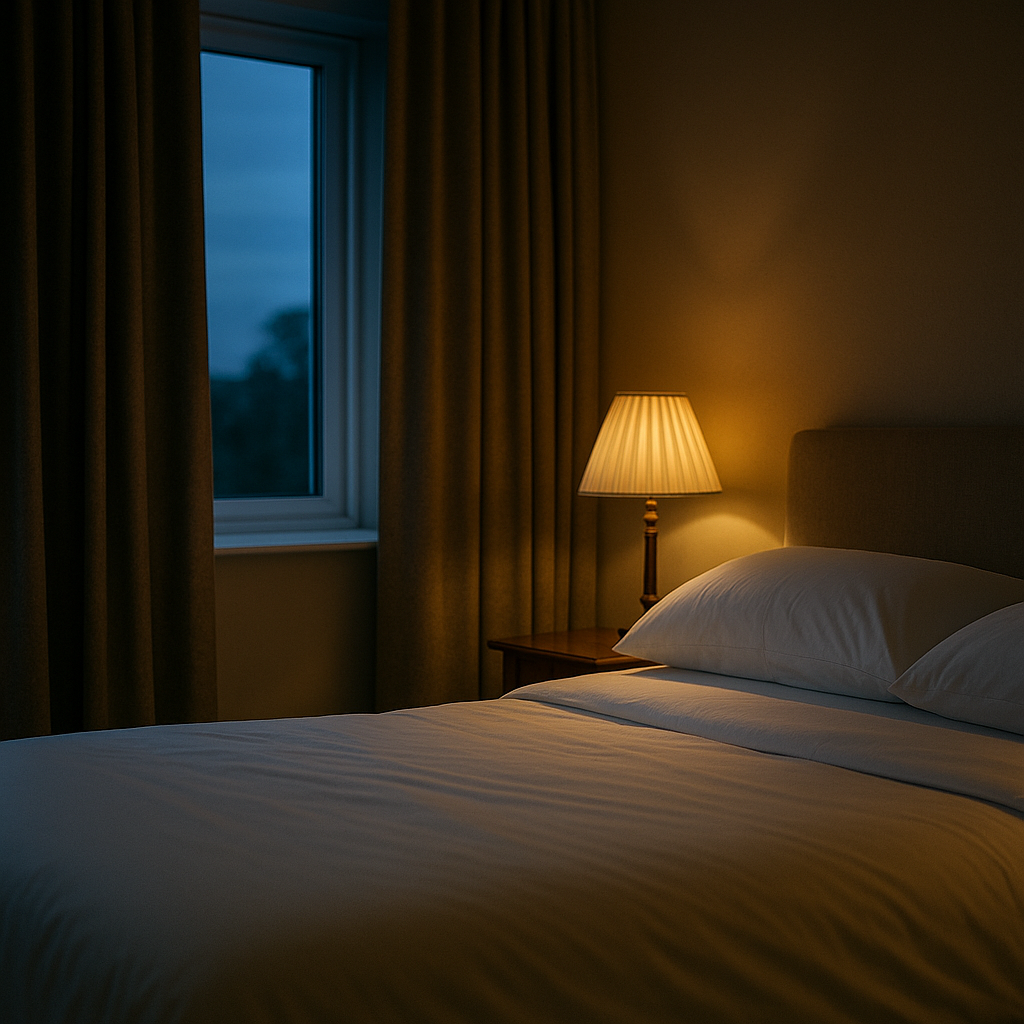
    Cosy British bedroom set up for better sleep habits with warm lighting and blackout curtains

    Why British Lifestyles Create Particular Sleep Challenges

    A few peculiarly British habits work against good sleep in ways that don’t get discussed enough. Evening tea is the obvious one. Black tea contains roughly 47mg of caffeine per cup, and a significant proportion of UK adults drink it well into the evening out of pure habit or social comfort. Research from the University of Surrey found that caffeine consumed as early as six hours before bedtime still measurably reduces sleep duration. The problem isn’t tea per se; it’s the timing.

    Then there’s the commute factor. The UK has some of the longest average commute times in Europe, with many people in the South East spending upwards of 90 minutes each way. Arriving home after 20:00, grabbing a late meal, and trying to decompress while simultaneously checking emails is a recipe for a disrupted circadian rhythm. The body needs a proper wind-down window, and commuting frequently swallows it whole.

    Shift work is another issue that disproportionately affects British workers in healthcare, logistics, retail, and hospitality. The NHS alone employs hundreds of thousands on rotating shifts. Shift workers consistently report poorer sleep quality, and the knock-on effects on mental health and happiness are well documented. The 2025 findings from the Sleep Research Centre at Surrey highlight that even a single night of disrupted sleep raises cortisol markers associated with low mood the following day.

    Better Sleep Habits Backed by Recent UK Research

    Set a caffeine cut-off time

    The researchers at Surrey are fairly firm on this: stop caffeine by 14:00 if you plan to sleep before midnight. That includes tea, coffee, energy drinks, and darker soft drinks. Switching to herbal alternatives like chamomile or rooibos in the afternoon is not just a wellness cliché; the evidence genuinely supports it. Chamomile contains apigenin, a compound that binds to GABA receptors in the brain and promotes relaxation.

    Treat your bedroom like a sleep environment

    This sounds obvious until you look at how most British bedrooms are actually set up. According to a 2024 YouGov survey, over 60% of UK adults use their bedroom as a secondary workspace, particularly those in smaller flats. Light is the biggest disruptor. The blue-spectrum light from screens suppresses melatonin production, but so does ambient streetlight seeping in through thin curtains.

    Blackout solutions matter more than most people realise. A good quality set of shutters can eliminate almost all external light intrusion, which is particularly relevant in towns and cities where street lighting rarely dims before 05:00. The effect on melatonin onset is not trivial; darker bedrooms have been consistently linked to earlier sleep onset and longer slow-wave sleep cycles.

    Chamomile tea on a bedside table as part of a better sleep habits evening routine

    Manage the late commute wind-down

    If you’re regularly getting home after 20:00, the temptation is to eat late, scroll through your phone, and fall asleep on the sofa. Sleep scientists recommend a deliberate “transition ritual” of around 30 to 45 minutes between arriving home and attempting to sleep. This doesn’t need to be elaborate. A warm shower, a non-caffeinated drink, dimmed lights, and something genuinely undemanding to read or watch all signal to your nervous system that the workday is finished.

    What specifically doesn’t work: checking work emails after 21:00, engaging with social media arguments, or watching high-tension drama immediately before bed. The cortisol spike from stress-inducing content is physiologically real and it directly delays sleep onset.

    Anchor your wake time, not just your bedtime

    One of the most robust findings from recent UK sleep research is that a consistent wake time is more important than a consistent bedtime. The body’s circadian clock anchors primarily to morning light and the time you get up. If you sleep in by two hours on a Sunday morning (a very British habit), you effectively give yourself mild social jet lag going into the working week. Keeping your wake time within a 30-minute window every day, including weekends, significantly improves sleep quality within two to three weeks.

    Advice specifically for shift workers

    For those on rotating shifts, the standard advice is often impractical. What does help, according to research published in the journal Occupational and Environmental Medicine, is using blackout curtains or government guidance on shift work and health to align the sleep environment with your current pattern rather than the outside world. Eating a small, low-sugar meal before your sleep period and avoiding alcohol as a sleep aid (it reduces REM sleep markedly) are also consistently supported by the evidence.

    The Mood Connection: Why Better Sleep Actually Makes You Happier

    It’s worth being explicit about why this matters beyond feeling rested. The link between sleep quality and subjective happiness is one of the most robust findings in positive psychology. A 2024 study from the University of Oxford’s Department of Psychiatry found that improving sleep quality in participants with mild to moderate low mood produced happiness improvements comparable to short-term therapy interventions. Not comparable to medication. Comparable to actual talking therapy.

    The mechanism is fairly clear: sleep is when the brain processes emotional memories, consolidates learning, and regulates the hormonal systems that govern mood. Poor sleep doesn’t just make you tired; it makes negative experiences feel more intense and positive ones feel flatter. Getting this right is arguably the single highest-leverage thing most people can do for their daily wellbeing.

    Practical Steps to Start Tonight

    Rather than overhauling everything at once, pick one or two changes and stick with them for a fortnight. Move your last caffeinated drink to before 14:00. Block out your bedroom light properly. Set an alarm for the same time tomorrow and the day after, regardless of how late you went to sleep.

    British sleep scientists aren’t asking for perfection. They’re asking for consistency. The research is clear that small, sustained shifts in better sleep habits produce real and lasting improvements in both sleep quality and everyday happiness. Start tonight.