Sleep research in Britain has moved on considerably from the old “eight hours and you’ll be fine” advice. The latest work coming out of institutions like the Sleep Research Society and teams at the University of Oxford and Surrey’s Sleep Research Centre paints a far more nuanced picture. Better sleep habits, it turns out, are deeply tied to the specific rhythms of British life, and that means the generic advice imported from elsewhere often misses the mark entirely.
The good news is that small, targeted changes make a genuinely measurable difference to both sleep quality and daytime mood. Here is what the science actually says, translated into things you can start doing this week.
Why British Lifestyles Create Particular Sleep Challenges
A few peculiarly British habits work against good sleep in ways that don’t get discussed enough. Evening tea is the obvious one. Black tea contains roughly 47mg of caffeine per cup, and a significant proportion of UK adults drink it well into the evening out of pure habit or social comfort. Research from the University of Surrey found that caffeine consumed as early as six hours before bedtime still measurably reduces sleep duration. The problem isn’t tea per se; it’s the timing.
Then there’s the commute factor. The UK has some of the longest average commute times in Europe, with many people in the South East spending upwards of 90 minutes each way. Arriving home after 20:00, grabbing a late meal, and trying to decompress while simultaneously checking emails is a recipe for a disrupted circadian rhythm. The body needs a proper wind-down window, and commuting frequently swallows it whole.
Shift work is another issue that disproportionately affects British workers in healthcare, logistics, retail, and hospitality. The NHS alone employs hundreds of thousands on rotating shifts. Shift workers consistently report poorer sleep quality, and the knock-on effects on mental health and happiness are well documented. The 2025 findings from the Sleep Research Centre at Surrey highlight that even a single night of disrupted sleep raises cortisol markers associated with low mood the following day.
Better Sleep Habits Backed by Recent UK Research
Set a caffeine cut-off time
The researchers at Surrey are fairly firm on this: stop caffeine by 14:00 if you plan to sleep before midnight. That includes tea, coffee, energy drinks, and darker soft drinks. Switching to herbal alternatives like chamomile or rooibos in the afternoon is not just a wellness cliché; the evidence genuinely supports it. Chamomile contains apigenin, a compound that binds to GABA receptors in the brain and promotes relaxation.
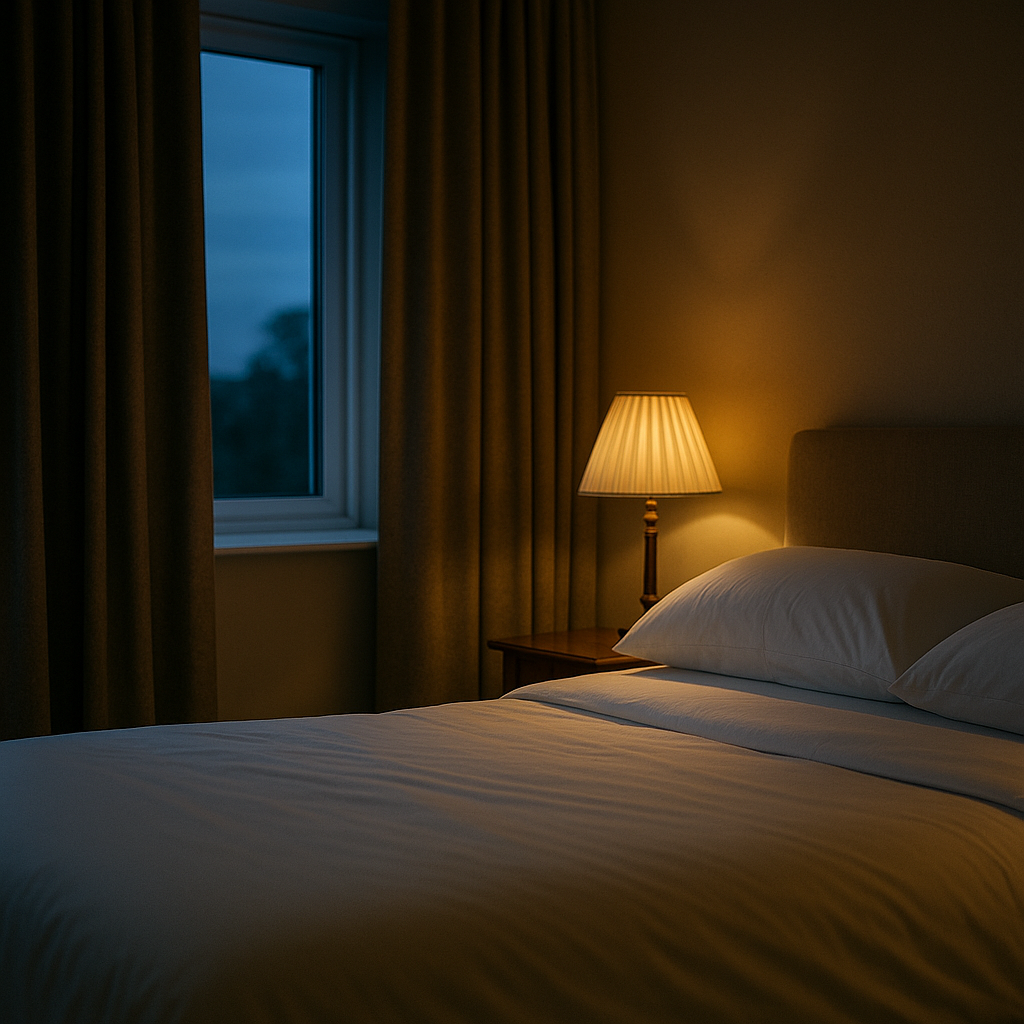
Treat your bedroom like a sleep environment
This sounds obvious until you look at how most British bedrooms are actually set up. According to a 2024 YouGov survey, over 60% of UK adults use their bedroom as a secondary workspace, particularly those in smaller flats. Light is the biggest disruptor. The blue-spectrum light from screens suppresses melatonin production, but so does ambient streetlight seeping in through thin curtains.
Blackout solutions matter more than most people realise. A good quality set of shutters can eliminate almost all external light intrusion, which is particularly relevant in towns and cities where street lighting rarely dims before 05:00. The effect on melatonin onset is not trivial; darker bedrooms have been consistently linked to earlier sleep onset and longer slow-wave sleep cycles.

Manage the late commute wind-down
If you’re regularly getting home after 20:00, the temptation is to eat late, scroll through your phone, and fall asleep on the sofa. Sleep scientists recommend a deliberate “transition ritual” of around 30 to 45 minutes between arriving home and attempting to sleep. This doesn’t need to be elaborate. A warm shower, a non-caffeinated drink, dimmed lights, and something genuinely undemanding to read or watch all signal to your nervous system that the workday is finished.
What specifically doesn’t work: checking work emails after 21:00, engaging with social media arguments, or watching high-tension drama immediately before bed. The cortisol spike from stress-inducing content is physiologically real and it directly delays sleep onset.
Anchor your wake time, not just your bedtime
One of the most robust findings from recent UK sleep research is that a consistent wake time is more important than a consistent bedtime. The body’s circadian clock anchors primarily to morning light and the time you get up. If you sleep in by two hours on a Sunday morning (a very British habit), you effectively give yourself mild social jet lag going into the working week. Keeping your wake time within a 30-minute window every day, including weekends, significantly improves sleep quality within two to three weeks.
Advice specifically for shift workers
For those on rotating shifts, the standard advice is often impractical. What does help, according to research published in the journal Occupational and Environmental Medicine, is using blackout curtains or government guidance on shift work and health to align the sleep environment with your current pattern rather than the outside world. Eating a small, low-sugar meal before your sleep period and avoiding alcohol as a sleep aid (it reduces REM sleep markedly) are also consistently supported by the evidence.
The Mood Connection: Why Better Sleep Actually Makes You Happier
It’s worth being explicit about why this matters beyond feeling rested. The link between sleep quality and subjective happiness is one of the most robust findings in positive psychology. A 2024 study from the University of Oxford’s Department of Psychiatry found that improving sleep quality in participants with mild to moderate low mood produced happiness improvements comparable to short-term therapy interventions. Not comparable to medication. Comparable to actual talking therapy.
The mechanism is fairly clear: sleep is when the brain processes emotional memories, consolidates learning, and regulates the hormonal systems that govern mood. Poor sleep doesn’t just make you tired; it makes negative experiences feel more intense and positive ones feel flatter. Getting this right is arguably the single highest-leverage thing most people can do for their daily wellbeing.
Practical Steps to Start Tonight
Rather than overhauling everything at once, pick one or two changes and stick with them for a fortnight. Move your last caffeinated drink to before 14:00. Block out your bedroom light properly. Set an alarm for the same time tomorrow and the day after, regardless of how late you went to sleep.
British sleep scientists aren’t asking for perfection. They’re asking for consistency. The research is clear that small, sustained shifts in better sleep habits produce real and lasting improvements in both sleep quality and everyday happiness. Start tonight.