There is something quietly remarkable happening in GP surgeries and community health centres across the UK. Alongside the usual prescription pads and referral letters, a growing number of health professionals are pointing patients towards something altogether warmer and furrier. Social prescribing, the practice of connecting people with non-clinical community activities to support their health, has expanded significantly in recent years, and animals are increasingly central to it. Pet ownership mental health UK NHS conversations have moved well beyond anecdote. There is now a body of evidence that GP link workers and social prescribers are drawing on when they suggest a patient might benefit from a dog, a cat, or even a visit to a community farm.
What social prescribing with animals actually looks like
Social prescribing is not new. The NHS Long Term Plan, published in 2019, committed to embedding link workers in primary care networks across England, and by 2025 there were over 3,000 of them operating nationwide according to NHS England figures. What has shifted is how confidently those link workers are referring patients to animal-based activities as part of a structured care plan.
In practice, this can take several forms. Some patients are encouraged to adopt a rescue dog from a local shelter, with the link worker helping them access low-cost or subsidised adoption through charities such as Dogs Trust or Cats Protection. Others are referred to care farms, where spending time with horses, chickens, or goats is used to reduce anxiety and build routine. Some GP practices have partnered with Pets As Therapy, a UK charity whose volunteers bring trained dogs and cats into surgeries, care homes, and mental health units for structured visits. The dog does not need to be yours to provide a benefit, it turns out.
The evidence behind pet ownership and mental health
Sceptics are right to ask what the research actually says, and the honest answer is that the evidence is encouraging without being definitive. A 2022 review published in BMC Psychiatry examined 17 studies and found consistent associations between pet ownership and reduced symptoms of anxiety, depression, and loneliness, particularly among adults living alone. The researchers noted that the act of caring for an animal creates structure and a sense of purpose, two things that tend to erode quickly when someone is isolated or struggling.
UK-specific data adds texture to this. The Mental Health Foundation found in its 2022 loneliness report that around 25% of UK adults reported feeling lonely often or always, and that pet ownership was among the factors associated with lower loneliness scores. The Office for National Statistics has similarly flagged that living alone is one of the strongest predictors of chronic loneliness in England, and it is precisely this group that social prescribers are most keen to reach.
Animals seem to work on several mechanisms at once. Physical touch, particularly stroking a dog or cat, has been shown in laboratory settings to lower cortisol (the body’s primary stress hormone) and trigger releases of oxytocin. Daily dog walking gets people outside, adds light exercise, and creates incidental social contact with other dog owners. Routine feeding and care gives structure to days that might otherwise drift. These are not small things for someone in the depths of a depressive episode.
Loneliness, anxiety, and who benefits most
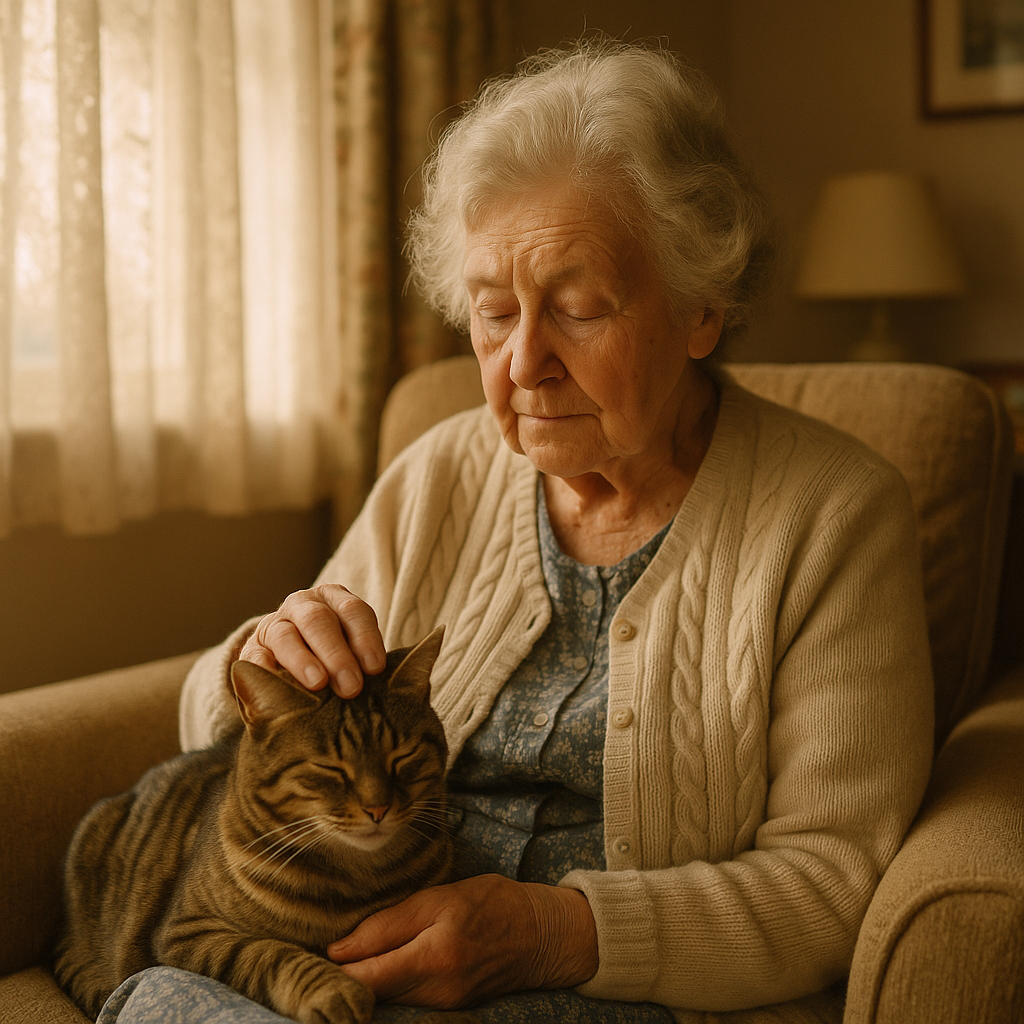
Not everyone responds the same way, and good social prescribers know this. Older adults living alone tend to show the clearest benefit from pet ownership, partly because a pet reintroduces daily purpose and physical contact that retirement and bereavement can strip away. The Campaign to End Loneliness, which works with NHS partners across England, Wales, and Scotland, has documented strong qualitative evidence that pet ownership changes the texture of daily life for isolated older people in ways that group activities sometimes cannot.
Younger adults dealing with anxiety also report positive effects, particularly from dog walking, which combines the well-established benefits of outdoor exercise with the social lubricant effect of having an animal that strangers want to engage with. A dog in a park is a conversation starter. That matters when anxiety has made social interaction feel impossible.
There is a reason wellbeing and sleep quality are often discussed together in this context. Restful nights and calmer days tend to reinforce each other, and for people whose anxiety disrupts sleep, having a calm evening routine with a pet can ease the transition into rest. If you are curious about how sleep and mood interact on a deeper level, what British sleep scientists recommend for a better night’s rest is worth reading alongside the animal-assisted wellbeing literature.
The practical reality: cost, housing, and access
The obvious tension in prescribing pet ownership is that it is not free and not always possible. Renting in the UK is a particular barrier. The Renters’ Rights Act 2024, which received Royal Assent in late 2024, strengthened tenants’ rights to request permission to keep pets, and landlords must now have reasonable grounds to refuse. That is a genuine policy shift, and link workers are increasingly aware of it when talking through options with patients in private rented accommodation.
Cost remains real. A dog, once you account for food, vet bills, insurance, and equipment, can cost between £1,000 and £2,000 a year at minimum. Cats are cheaper but still a commitment. This is why care farms, Pets As Therapy visits, and community animal projects are so valuable: they deliver many of the same benefits without asking someone on a limited income to take on a dependent. Some NHS Integrated Care Boards are now funding these schemes directly as part of their social prescribing budgets, which is a meaningful development.
What the NHS is actually funding
NHS England’s guidance on social prescribing, available at england.nhs.uk, makes clear that link workers have discretion to refer to any community asset that addresses a patient’s wider determinants of health. Animal-assisted activities fall squarely within that framing. Several Integrated Care Systems, including those in Greater Manchester and the South West, have published evaluations showing measurable reductions in GP appointment frequency among patients engaged in social prescribing programmes that include animal contact.
The picture that emerges is one of a health system cautiously but genuinely opening up to the idea that wellbeing is not purely pharmaceutical. Pet ownership mental health UK NHS conversations are happening at a policy level now, not just in individual consultations. Whether that translates into broader funded schemes will depend on how clearly the evidence continues to build. For now, the dogs and cats are doing their part.
Frequently Asked Questions
Can a GP actually prescribe a pet for mental health in the UK?
GPs do not write formal prescriptions for pets, but NHS link workers and social prescribers can refer patients to animal-assisted activities, care farms, or schemes like Pets As Therapy as part of a social prescribing plan. The referral is voluntary and based on the patient’s circumstances.
What is social prescribing and how does it involve animals?
Social prescribing connects patients with non-clinical community support to address health and wellbeing needs. In the context of animals, this might mean referrals to care farms, dog-assisted therapy sessions, or support in adopting a rescue pet from a charity such as Dogs Trust.
Is there scientific evidence that pets reduce anxiety and loneliness?
Yes, though the evidence is still developing. A 2022 review in BMC Psychiatry found consistent links between pet ownership and reduced anxiety, depression, and loneliness across 17 studies. Physical contact with animals has also been shown to lower cortisol and trigger oxytocin release in multiple laboratory settings.