Something has shifted. Speak to anyone who recently took the Eurostar to Paris, or spent two nights aboard a ferry to Santander, and you’ll notice they don’t just talk about the destination. They talk about the journey itself, as though that was the holiday. The getting-there has become the point. This is slow travel in practice, and it’s quietly becoming one of the most talked-about wellbeing shifts among British holidaymakers right now.
Slow travel UK happiness isn’t a wellness buzzword dreamt up by a lifestyle brand. It’s a pattern that’s emerging from real choices: people booking sleeper trains through the Alps, taking the overnight ferry from Harwich to the Hook of Holland, or spending three days on the Caledonian Sleeper before they even reach their Scottish cottage. I’ve spoken to people who describe these journeys as the most restful parts of their trip. That’s not nothing.
Why short-haul flights have started to feel like hard work
Flying has a well-documented misery attached to it now. Budget airlines have stripped back everything that once made air travel feel like an occasion. You’re herded through security, charged for a bag, crammed into a seat with 30 centimetres of legroom, and expected to feel grateful because it only cost £49 each way. The stress begins before you’ve even left the house. A BBC survey on travel stress found that airport queues and security procedures rank among the top sources of holiday-related anxiety for British travellers. You arrive at your destination frazzled, and it takes a day just to decompress.
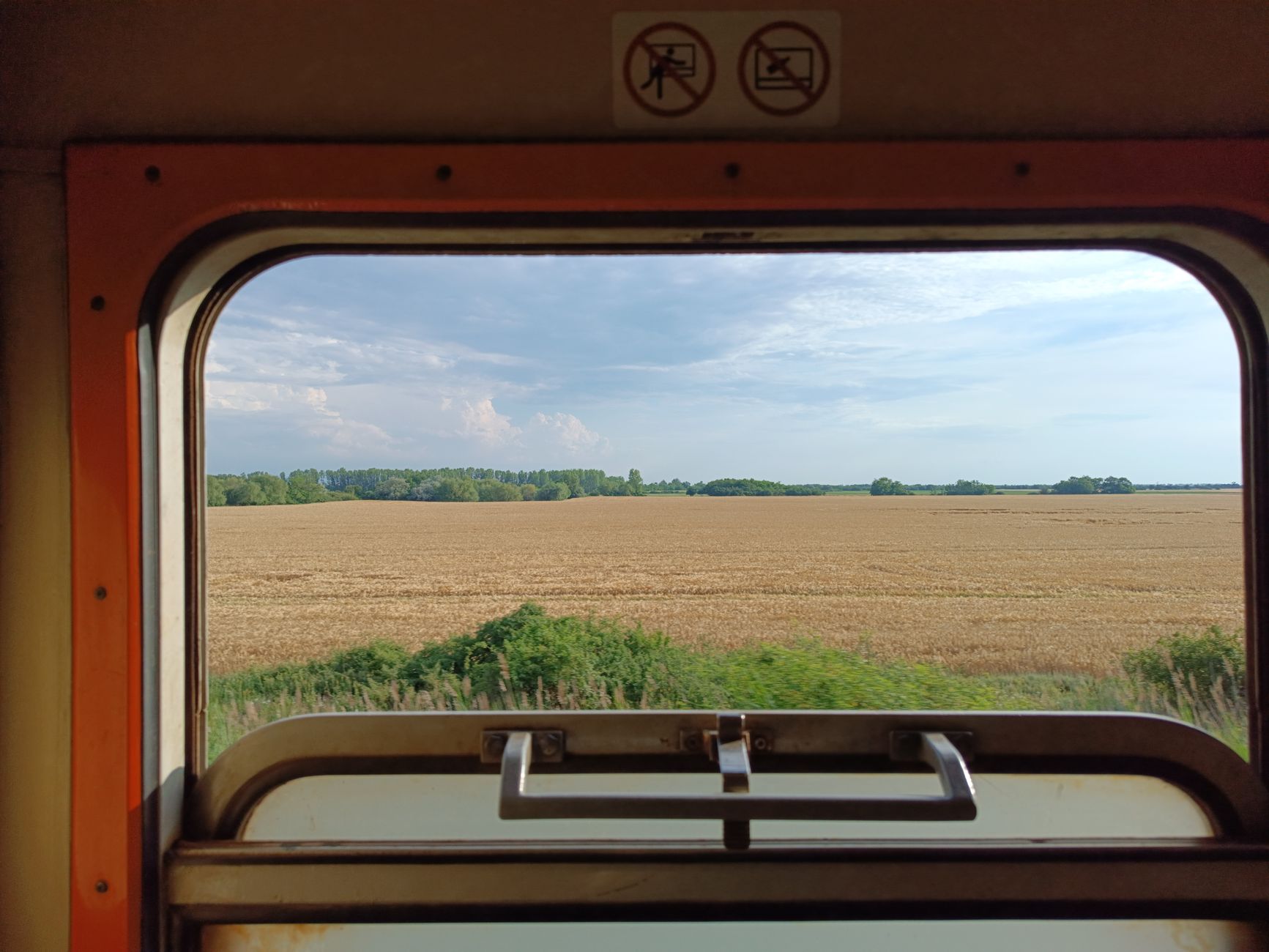
Rail and ferry journeys, by contrast, tend to do the opposite. You board at a civilised hour, find your seat, watch the countryside change through a window, and eat something that doesn’t come in a foil wrapper. The rhythm of the journey itself seems to begin the unwinding process. I’d argue this is one of the most underappreciated aspects of slow travel: it doesn’t wait for you to arrive before giving you anything.
What travellers actually report feeling
The anecdotal evidence is strong, but there’s something more structural happening too. Research published by the mental health charity Mind has long pointed to natural landscapes and reduced sensory overload as significant contributors to improved mood. A slow train journey through the Scottish Highlands or across France delivers both, for hours at a stretch. You’re not sitting in a pressurised metal tube staring at a seatback screen. You’re watching the world move at a pace your nervous system can actually process.
People who’ve made the switch frequently mention three things: they feel calmer on arrival, they feel more present during the trip, and they return home without the specific exhaustion that comes from connecting flights and early-morning airport runs. One traveller I spoke with described taking the train from London St Pancras to Marseille: “By the time we got there I felt like I’d already had a mini-break on the train. I wasn’t playing catch-up with my own body.”
This connects directly to what the slow living movement in the UK has been saying for some time: that deceleration itself has value. Speed has been sold to us as a virtue, but it turns out that slower transitions between states, whether between home and away, or work and rest, seem to help people settle more fully into where they are.
The rail and ferry options that UK travellers are actually using
The infrastructure is better than many people realise. Eurostar connects London St Pancras to Paris, Brussels, Amsterdam and Cologne. The LNER Caledonian Sleeper runs overnight from London Euston to Edinburgh, Glasgow, Aberdeen, Inverness and Fort William. Brittany Ferries operates routes from Plymouth, Poole and Portsmouth to France and Spain, with overnight crossings that include cabins, restaurants and sea air. Stena Line runs ferry services across the Irish Sea. None of this requires heroic logistical planning.
The cost question is real, though. A Eurostar ticket booked in advance can be cheaper than a flight once you factor in luggage fees, transfers and the general faff of flying from a regional airport. A cabin on an overnight ferry to France, booked several months ahead, often lands in a comparable range to a budget airline fare. The economics aren’t always punishing. Where slow travel does cost more, many people who’ve tried it say they’d gladly pay the difference.
How it changes the holiday itself
There’s a broader effect that slow travellers tend to notice: their relationship with the destination changes. When you’ve watched the landscape gradually shift from the Home Counties to Provence over six hours of train travel, you arrive somewhere with a proper sense of distance covered. You’ve earned the geography, in a mild and pleasant way. This seems to sharpen attention once you get there. People report being more curious, more willing to stay put in one place, less compelled to rush through a list of attractions.
That’s consistent with what psychologists describe as “arrival fallacy”, the tendency to immediately start thinking about the next thing the moment you’ve reached a destination. Slow travel seems to soften this. You’ve already been present for several hours before you arrive, and that state carries forward.
I’ve noticed this connects to something I’ve written about separately: the British art of pottering, the value of time that isn’t rushing anywhere, that simply allows things to unfold. A good train journey through France or a calm overnight crossing to Ireland is pottering at a grand scale.
The environmental angle matters, but it’s not the whole story
A return flight from London to Barcelona produces roughly 150kg of CO2 per passenger. The same trip by train produces a fraction of that. Many slow travellers mention the environmental dimension as part of their motivation, but interestingly, it rarely seems to be the primary driver. Most people describe discovering the wellbeing benefits first, and feeling pleased about the environmental side as a bonus. That ordering matters. Guilt-based behaviour change tends not to stick; genuine personal benefit tends to.
There’s also something worth saying about the quality of rest. If you’ve read about how small daily choices compound into greater satisfaction, the same logic applies to holidays. A journey that begins with a calm departure, unfolds at a human pace and delivers you somewhere feeling settled rather than stressed sets the tone for everything that follows. It’s a different kind of holiday logic, and a lot of British travellers are starting to find it rather appealing.
Slow travel isn’t a sacrifice. That’s the thing people who’ve tried it keep saying. It turns out the journey was always part of the point, we just forgot for a while.