There is something quietly radical about sitting down with a piece of paper, a decent pen, and the deliberate intention to write to another person. No autocomplete. No read receipts. No notification that they’ve seen it and haven’t replied. Just ink, thought, and a little patience. I’ve noticed more people talking about letter-writing lately, not as nostalgia for nostalgia’s sake, but as a genuine response to feeling overwhelmed by the constant churn of digital communication. And the evidence suggests they’re onto something.
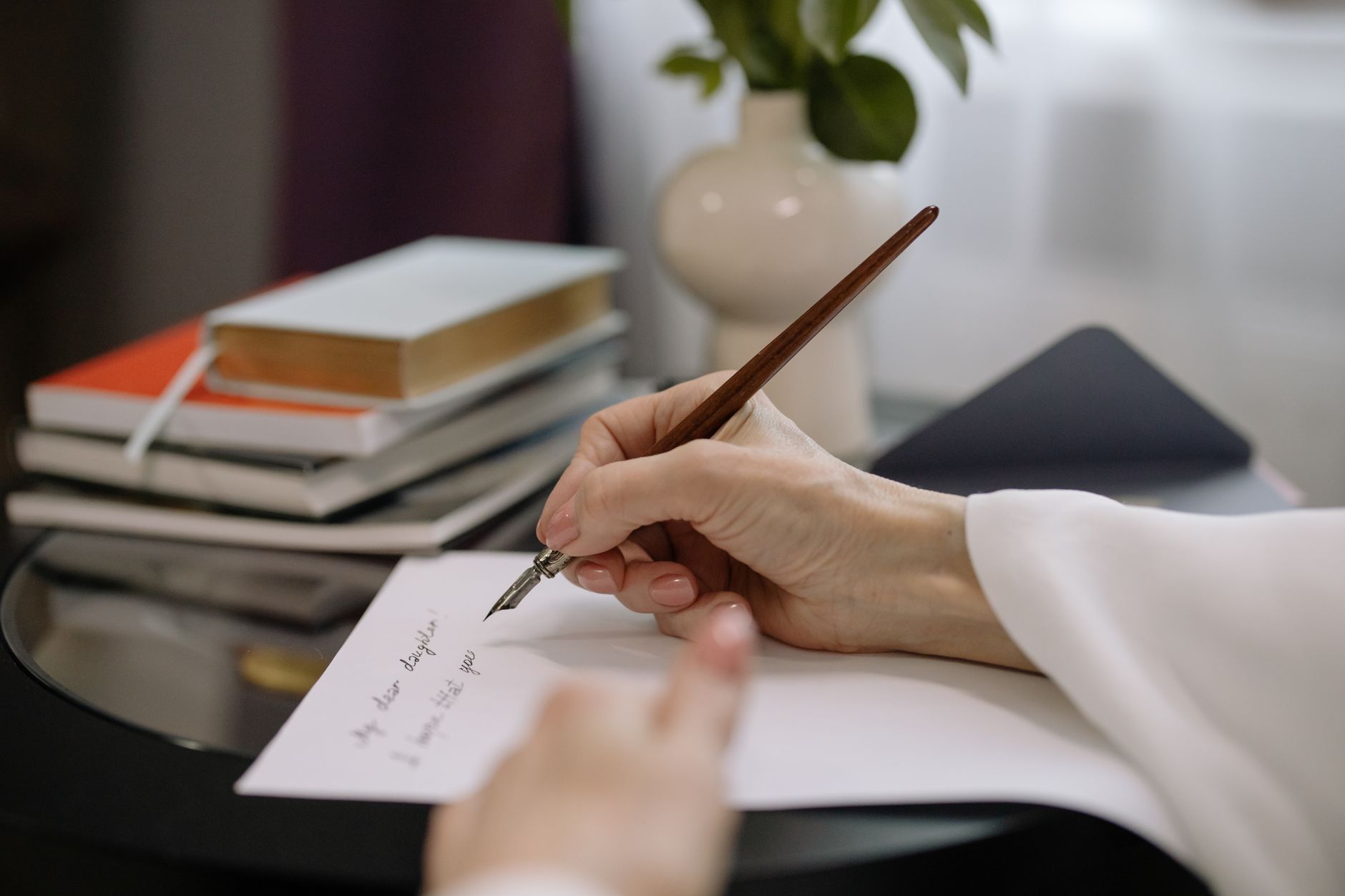
The slow living movement in the UK has been quietly gathering pace for a few years now, and handwritten correspondence fits squarely within it. When everything from work emails to birthday wishes arrives as a push notification, receiving a physical letter feels different in a way that’s hard to fully articulate but easy to feel. The Royal Mail’s own research has found that 70% of people say receiving a handwritten letter makes them feel genuinely special. That’s not a small number, and it points to something real about how human brains are wired for the tangible.
Why slow communication feels different to fast communication
Writing a letter takes time, and that’s the entire point. You have to decide what to say before you say it. There’s no delete button once the ink is dry, so you choose your words more carefully. Psychologists call this deliberate processing, and it’s the opposite of the reactive, reflexive mode most of us slip into when we’re firing off text messages or replying to emails in a hurry.
Dr Veronica Lamarque, a wellbeing researcher at the University of Exeter, has written about how the act of composing a letter by hand engages a different kind of attention than typing. The slower pace allows genuine reflection. You’re not just communicating; you’re thinking. And thinking, it turns out, is something many of us don’t do enough of in any given day. I’d argue that even the physical act of choosing a card, finding a stamp, and walking to the post box involves a series of small, deliberate choices that feel good in a way scrolling simply doesn’t.
What the wellbeing research actually says
The benefits of writing letters by hand in the UK aren’t just anecdotal. A 2023 study published in the British Journal of Health Psychology found that participants who wrote expressive letters to friends and family reported measurably lower levels of loneliness after four weeks compared to a control group who communicated only digitally. The act of writing forced them to articulate feelings they hadn’t consciously examined, which itself had a positive effect on mood.
There’s also a growing body of work on the link between handwriting and cognitive health. The NHS acknowledges that activities requiring fine motor skills and sustained concentration, including writing by hand, can support brain health across all age groups. For older adults particularly, regular handwriting has been associated with sharper memory recall and improved focus. If you’re interested in how small, tactile habits connect to everyday happiness, the parallels with cooking from scratch are striking: both involve slowing down, using your hands, and producing something that didn’t exist before you started.
The community and connection angle
Letter-writing isn’t only a solo pursuit. Across the UK, pen pal schemes are seeing a quiet revival. Organisations like Letter Exchange connect people across age groups, and several NHS trusts have introduced letter-writing programmes in care homes and mental health wards after noticing that receiving post improved residents’ outlook. There’s a particular poignancy to letters in the context of loneliness, which the UK Government’s own loneliness strategy identifies as a public health concern affecting millions of people.
I think what makes letter-writing so potent as a wellbeing tool is that it’s inherently other-focused. You sit down to write because you’re thinking about someone else. You imagine them opening the envelope. You choose detail that you know will resonate with them specifically. That kind of intentional generosity, extended to another person over the time it takes to fill a page or two, is genuinely good for both parties. It’s the written equivalent of what researchers mean when they talk about prosocial behaviour improving the giver’s mood as much as the receiver’s.
Getting started without making it a chore
One of the things that puts people off is the mistaken belief that a letter needs to be long, literary, or in any way impressive. It doesn’t. The best letters I’ve received have been two paragraphs written on the back of a postcard, specific and warm and clearly meant just for me. That specificity is what distinguishes a letter from a mass-market greeting card. You don’t need beautiful stationery, although a decent pen does help, purely for the physical pleasure of writing with it.
Start small. Pick one person you haven’t spoken to properly in months and write them a single side. Tell them something you’ve been thinking about lately, ask them a question you’re genuinely curious about, and sign off. Post it. The act itself, from the moment you sit down to the moment you hear it drop into the post box, is the practice. The reply, if it comes, is a bonus.
This kind of gentle, intentional habit sits comfortably alongside the broader case for pottering and unproductive time, those stretches of the day when you’re doing something for its own sake rather than for any measurable outcome. Letter-writing is productive in the deepest sense while looking very much like doing nothing. That’s a rare combination.
What to do with the letters you receive
Keep them. This sounds obvious, but in an age when we habitually delete and archive, the instinct to store physical objects has weakened. A bundle of letters in a drawer is an archive of relationships, a record of who was thinking of whom and when. Many people who’ve inherited boxes of family correspondence describe the experience of reading them as unexpectedly moving. You get a version of a person that no photograph or voicemail captures. Letters preserve the texture of thought.
There’s a real happiness to be found in the benefits of writing letters by hand, not because it’s retro or counter-cultural, but because it’s human. It slows you down, focuses your attention on one person, and produces something real. In a year when inbox anxiety has become almost universal, that feels less like a nostalgic hobby and more like a genuine act of care, for someone else and, quietly, for yourself.
Frequently Asked Questions
What are the mental health benefits of writing letters by hand?
Handwriting a letter encourages deliberate thought and reflection, which has been linked to reduced anxiety and improved emotional clarity. Research published in the British Journal of Health Psychology found that people who wrote expressive letters to others reported lower loneliness levels after just four weeks compared to those communicating digitally only.
Is there a pen pal scheme in the UK for adults?
Yes. Letter Exchange is a well-established UK pen pal scheme connecting adults across age groups and interests. Several NHS trusts and care organisations have also introduced structured letter-writing programmes for older residents and those experiencing loneliness or poor mental health.
Does handwriting help with focus and concentration?
Evidence suggests it does. Writing by hand engages sustained attention and fine motor coordination in ways that typing doesn’t, and the NHS recognises such activities as beneficial for cognitive health. For older adults especially, regular handwriting has been associated with better memory recall and sharper concentration.
How do I start writing letters again if I haven't done it in years?
Start with a single side of paper or even a postcard to someone you’ve been meaning to catch up with. Keep it specific and personal rather than long or literary. You don’t need fancy stationery, though a comfortable pen helps. The habit builds naturally once you’ve sent your first one and felt the satisfaction of doing so.